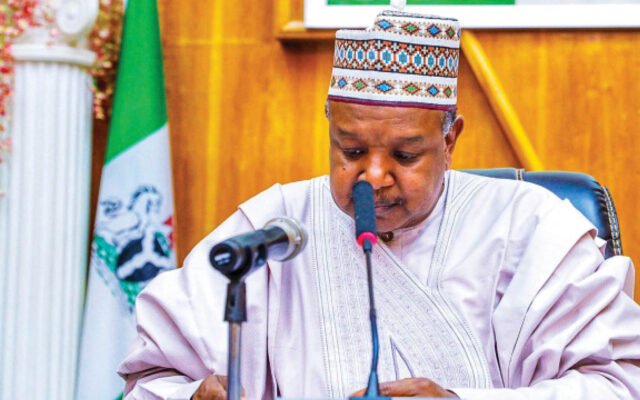

Nigeria’s Federal Government is targeting single-digit inflation before the end of 2027, with Finance Minister Taiwo Oyedele identifying lower borrowing costs, stronger business investment and improved household purchasing power as important objectives of the country’s economic policy.
Oyedele announced the target on October 26, 2026, at the 32nd Nigerian Economic Summit in Abuja. He said bringing inflation down could create the conditions for interest rates to fall to single-digit levels, potentially making credit more affordable for businesses and supporting faster economic expansion.
The announcement comes as Nigeria continues to manage the effects of economic reforms, high financing costs and persistent pressure on household budgets. Although the country’s headline inflation rate has declined, many consumers still face expensive food, transportation and other essential goods and services.
According to the National Bureau of Statistics (NBS), Nigeria’s headline inflation rate fell to 14.63 per cent in September 2026 from 15.39 per cent in August. The reduction represents progress in slowing price increases, but inflation remains above the government’s newly stated target.
The minister’s announcement connects price stability with the wider challenge of making economic growth more beneficial to ordinary Nigerians. For businesses, lower inflation could eventually support more predictable operating costs. For households, it could help incomes retain more of their purchasing power.
However, achieving single-digit inflation within the stated timeframe will require sustained progress across several areas of the economy. The government has not yet provided a detailed public timetable setting out the specific measures and interim targets it intends to use to reach the goal.
The target is therefore an ambition rather than a guaranteed outcome, with its success depending on monetary policy, food production, exchange-rate conditions, energy costs and the management of public finances.
Oyedele also drew attention to the difference between Nigeria’s reported economic growth rate and the cost of borrowing. He argued that an economy growing at 4.43 per cent could achieve greater potential if businesses were able to obtain loans at single-digit interest rates rather than facing borrowing costs approaching 30 per cent.
The comparison highlights a significant concern for companies that need external financing to expand production, purchase equipment or employ additional workers.
For continued coverage of Nigeria’s economy, banking sector and business developments, readers can visit BusinessTech Nigeria.
The government’s immediate challenge is to translate the inflation target into a credible economic programme that supports lower prices without undermining financial stability.
Nigeria’s inflation rate has been influenced by several interconnected factors, including exchange-rate movements, higher transport costs, energy expenses and supply constraints affecting essential goods. Addressing these pressures will require more than a single adjustment to interest rates.
Food prices are particularly important because they account for a substantial part of household spending. The NBS reported annual food inflation of 19.59 per cent in September 2026, demonstrating that food-related price pressures remained significant even as headline inflation declined.
When food becomes more expensive, households often have less money available for healthcare, education, transportation and savings. Lower-income families are particularly exposed because a large share of their earnings goes towards basic necessities.
Consequently, a reduction in headline inflation will not necessarily provide immediate relief if the prices of essential goods remain high relative to household incomes.
The distinction between inflation and the general price level is important. Lower inflation means prices are rising more slowly; it does not automatically mean that prices will return to their previous levels. For consumers to experience meaningful relief, wages and other income sources must also become more adequate relative to living expenses.
The government has indicated that it wants household incomes to grow faster than prices. Achieving that objective will depend partly on stronger productivity, employment opportunities and the ability of businesses to expand without facing excessive financing costs.
The connection between inflation and interest rates is central to the government’s strategy. When inflation remains elevated, monetary policymakers may maintain relatively high interest rates to limit demand pressures and help stabilise prices.
Higher rates can make borrowing more expensive for businesses and households. They can also influence savings decisions, investment plans and the cost of financing government debt.
The Central Bank of Nigeria’s Monetary Policy Committee reduced the Monetary Policy Rate to 23 per cent at its September 21 and 22, 2026 meeting. The rate is an important reference point for monetary conditions, although commercial banks determine individual lending rates using additional factors, including credit risk, funding costs and operating expenses.
The central bank’s decision provides context for Oyedele’s ambition to see interest rates fall further as inflation declines. Nevertheless, the government cannot guarantee that lower inflation will immediately translate into single-digit commercial lending rates.
Banks must still assess borrowers’ ability to repay loans, the cost of raising funds and the risks associated with different sectors. Small businesses with limited collateral or irregular cash flow may continue to face expensive financing even if the benchmark rate falls.
The Central Bank of Nigeria also retains responsibility for monetary policy decisions. Its future decisions will depend on inflation expectations, economic conditions, exchange-rate developments and other relevant indicators, rather than the government’s target alone.
The latest monetary policy decisions are available through the Central Bank of Nigeria’s official website.
For Nigerian businesses, the prospect of lower interest rates is particularly significant. Companies often borrow to purchase inventory, pay suppliers, maintain machinery and finance expansion. When lending costs are high, some investments become financially unattractive, even where demand for goods and services exists.
Manufacturers may postpone plans to increase production capacity, while retailers may reduce inventory purchases to limit their exposure to expensive credit. Agricultural businesses can also struggle to finance equipment, storage facilities, irrigation and processing infrastructure.
If inflation declines sustainably and borrowing costs eventually follow, companies could find it easier to finance projects that improve productivity. More investment could support job creation, expand the supply of goods and services and strengthen competition in domestic markets.
However, cheaper credit alone would not resolve Nigeria’s business challenges. Electricity costs, transportation expenses, infrastructure gaps, insecurity and regulatory uncertainty can all affect whether a business can operate profitably.
The government would therefore need to complement its inflation objective with measures that reduce production costs and improve the environment for private investment.
Agriculture is one area where supply-side improvements could support the inflation target. Greater domestic food production, improved storage and more efficient distribution could help reduce shortages and limit price pressures.
Farmers need access to suitable inputs, financing, reliable transport and secure production environments. Without these conditions, increased demand for food can place sustained pressure on prices, even when monetary policy is restrictive.
Better storage and processing facilities could also reduce post-harvest losses, allowing more produce to reach consumers throughout the year. Improvements in road networks and distribution systems could help reduce the costs of moving food from farms to major urban markets.
Energy and transportation policies will also influence the inflation outlook. Businesses that depend on generators, fuel-powered transport or imported production inputs may pass higher operating expenses on to consumers.
A more stable cost environment could make it easier for companies to plan prices and investment. However, improvements will take time and will depend on the implementation of effective policies across several sectors.
Exchange-rate stability is another important consideration. When the naira weakens, imported goods and production inputs can become more expensive in local currency terms. This can affect manufacturers, retailers and service providers that rely on foreign equipment, raw materials or software.
A more predictable exchange-rate environment could reduce uncertainty for businesses and support investment planning. Nevertheless, exchange-rate movements are influenced by foreign-exchange supply and demand, export earnings, capital flows and confidence in the economy.
The government has argued that savings generated by its foreign-exchange and petrol-subsidy reforms have supported measures intended to benefit households and businesses. Oyedele cited salary increases, pension arrears payments and subsidised credit for small businesses among the measures associated with the reforms.
These are government claims about the use of reform-related savings, and their broader economic impact must be assessed alongside the costs households and businesses continue to face.
The policy challenge is to ensure that reforms improve economic efficiency while supporting a path towards stronger real incomes and more sustainable growth.
Fiscal policy will also matter. Government borrowing and spending can influence demand, liquidity and the availability of financing for private businesses. If fiscal pressures remain substantial, they could complicate efforts to reduce interest rates and make credit more accessible.
A coordinated approach between fiscal authorities and the central bank would help ensure that public financial decisions support rather than undermine the objective of price stability. Such coordination would need to respect the central bank’s monetary policy responsibilities while maintaining transparency about government spending and borrowing.
Another important consideration is how progress will be measured. The headline inflation rate provides a useful overview, but other indicators can reveal whether the reduction is broad-based.
Food inflation, core inflation, month-on-month price changes, exchange-rate conditions and domestic production trends can help explain whether price pressures are easing sustainably or merely responding to temporary factors.
The NBS publishes official inflation statistics, including headline and food inflation figures, through its official website. Regular monitoring of these figures will help businesses, households and policymakers assess progress towards the government’s target.
The government could also strengthen confidence by publishing interim milestones and explaining how it intends to respond if inflation begins rising again. Clear communication would help businesses make investment decisions and allow the public to compare policy objectives with measurable results.
For households, the most important outcome will be whether their incomes can cover a greater share of essential expenses. Lower inflation may help stabilise budgets, but lasting improvements will also depend on employment, wage growth and the availability of affordable goods and services.
For businesses, the test will be whether financing becomes more accessible and operating conditions become sufficiently predictable to support investment.
For investors, consistency in economic policy and confidence in the institutions responsible for implementation will remain important considerations.
Nigeria’s ambition to achieve single-digit inflation before the end of 2027 sets a clear objective, but the path towards it remains challenging. Moving from 14.63 per cent in September 2026 to below 10 per cent will require continued disinflation over the coming months.
The government must also ensure that the drive to reduce inflation does not overlook the conditions needed for sustainable production, employment and economic growth.
Ultimately, the success of the target will be measured not only by the official inflation rate but also by whether Nigerians experience improved purchasing power, businesses gain access to more affordable financing and productive investment creates lasting economic opportunities.