A local humanitarian ceasefire took effect early Tuesday in the Russian-occupied Ukrainian town of Oleshky, allowing aid workers to reach residents who have been cut off from regular supplies of food, medicine and other essentials. The temporary truce, brokered with involvement from U.S. intermediaries, is scheduled to last through the end of the week and covers a limited area where the United Nations has warned that up to 2,000 people remain stranded.
The arrangement comes as a United Nations-backed commission of inquiry released findings accusing Russia of committing war crimes and crimes against humanity through systematic attacks on Ukraine’s civilian energy infrastructure. The report concluded that the deliberate targeting of power generation and distribution facilities formed part of a broader effort to deprive civilians of essential services and inflict widespread suffering during the winter months.
Ukrainian officials confirmed that the ceasefire in Oleshky began in the early hours of 27 October. Russian authorities also acknowledged the local pause in hostilities. The town, located in Kherson region on the left bank of the Dnipro River, has been under Russian control since the early stages of the full-scale invasion. Access for humanitarian organisations has been severely restricted for extended periods, leaving the remaining civilian population dependent on limited local resources and occasional cross-line deliveries.
The UN inquiry’s report, delivered to the General Assembly, examined the pattern of strikes on energy facilities over successive winters. Investigators documented repeated attacks on thermal power plants, substations and transmission networks that serve large civilian populations. The commission argued that the scale, frequency and timing of the strikes demonstrated an intent to cause severe hardship rather than purely military advantage. Russia has consistently rejected such characterisations, describing its operations as legitimate targeting of infrastructure that supports Ukraine’s war effort.
Separately, Ukrainian authorities reported that Russian ballistic missiles struck Kyiv late on Monday, killing at least one person and injuring more than ten others. The attacks damaged a university building and student dormitories. Additional strikes in the Kharkiv area resulted in further civilian casualties. These incidents occurred even as the limited ceasefire in Oleshky was being finalised, underscoring the fragmented nature of the current battlefield and diplomatic efforts.
The Oleshky truce represents one of the few recent instances of a locally negotiated pause aimed specifically at civilian relief. Previous attempts at broader humanitarian corridors have often collapsed quickly or failed to materialise. Aid organisations have long warned that the civilian population in occupied areas faces acute shortages of medical supplies, clean water and heating fuel as colder weather approaches. The temporary window is intended to allow the delivery of critical goods and, where possible, the evacuation of vulnerable individuals.
International response to the UN findings has followed familiar lines. Western governments welcomed the report as further documentation of the human cost of the conflict and reiterated calls for accountability. Russian officials dismissed the conclusions as politically motivated. The commission’s work forms part of a wider body of investigations into alleged violations of international humanitarian law since the full-scale invasion began in February 2022.
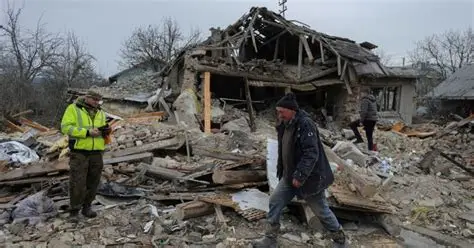
The energy infrastructure campaign has had measurable effects on civilian life across Ukraine. Blackouts, reduced heating capacity and damage to water systems have compounded the difficulties faced by communities already coping with displacement, economic disruption and the constant risk of further attacks. Repair crews have worked under dangerous conditions to restore service after each wave of strikes, often only for facilities to be hit again.
Diplomatic efforts to secure wider pauses in fighting or more durable arrangements have repeatedly stalled. The limited Oleshky ceasefire illustrates both the possibility of narrow, practical agreements and the difficulty of expanding them. U.S. involvement in facilitating the arrangement reflects ongoing attempts to create space for humanitarian access even while broader negotiations remain frozen.
Ukrainian President Volodymyr Zelenskyy has repeatedly highlighted the impact of energy strikes on ordinary citizens and called for stronger international measures to deter further attacks. Russian statements continue to frame the campaign as a response to Ukrainian actions and as a means of reducing Kyiv’s capacity to sustain military operations. The divergence in narratives leaves little common ground for comprehensive agreements.
The situation in Oleshky itself remains precarious. Even with a temporary ceasefire in place, the practical challenges of delivering aid into an occupied area are considerable. Coordination between Ukrainian, Russian and international actors is required for safe passage, and previous experiences have shown that such arrangements can break down rapidly if either side perceives a violation or shift in military advantage.
For the wider conflict, the combination of a local humanitarian pause and a high-profile UN accusation of systematic civilian targeting captures the dual track of current developments. On one side, limited practical steps are being taken to alleviate immediate suffering. On the other, legal and political processes continue to document and seek accountability for the broader pattern of conduct.
As winter approaches, the vulnerability of civilian energy systems remains a central concern. The UN report adds institutional weight to warnings that have been issued by humanitarian organisations for several seasons. Whether the findings will influence the intensity or targeting of future strikes is uncertain. What is clear is that the civilian population continues to bear a heavy share of the consequences of the prolonged war.
Official statements and updates on the ceasefire and related humanitarian efforts are issued by the relevant Ukrainian authorities and international organisations. Analysis of the conflict’s economic, energy and humanitarian dimensions can also be followed on platforms such as Business Tech.
The humanitarian ceasefire in Oleshky offers a narrow window of relief for a trapped civilian population, while the UN inquiry’s conclusions on energy infrastructure attacks reinforce the long-standing allegations of deliberate harm to non-combatants. Both developments highlight the continuing human cost of a conflict that shows no sign of rapid resolution.