The 2025 budget proposal has revealed significant financial commitments aimed at tackling Nigeria’s most pressing challenges. With increased funding across critical sectors, the federal government is taking bold steps to strengthen security, fight corruption, and boost governance.
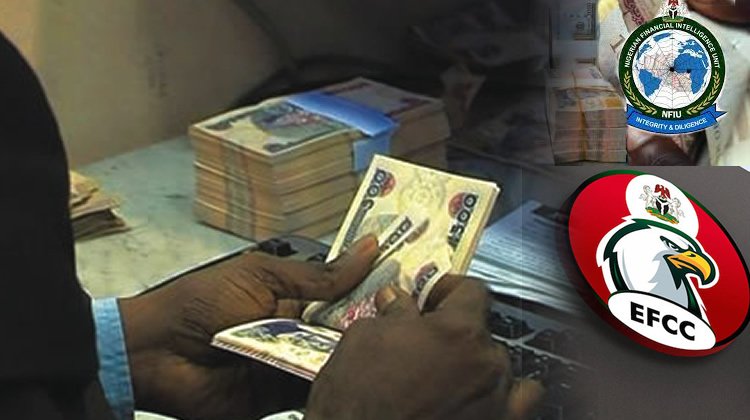
The Economic and Financial Crimes Commission (EFCC) received N63.23 billion. This allocation will enhance its efforts to combat economic crimes and corruption. Similarly, the Nigerian Financial Intelligence Unit (NFIU) secured N12.5 billion to improve its ability to track illicit financial activities.
National security remains a top priority. The Ministry of Defence was allocated a massive N2.92 trillion to strengthen the nation’s defense capabilities. The Ministry of Interior, which oversees internal security, received N1.13 trillion to ensure peace and order across the country.
The justice system also received notable funding. The judiciary was allocated N341.63 billion to support its operations, while the Ministry of Justice got N120.93 billion to improve the delivery of justice. Additionally, the Independent Corrupt Practices and Other Related Offences Commission (ICPC) was granted N15.87 billion to intensify its anti-corruption campaigns.
The government is preparing for credible elections by allocating N40 billion to the Independent National Electoral Commission (INEC). This funding will help strengthen electoral processes. Meanwhile, the Ministry of Police Affairs received N1.28 billion to enhance law enforcement.
Efforts to improve power infrastructure were boosted with N2.09 billion allocated to the Ministry of Power. The government also invested in innovation by granting the Nigerian Agency for Science and Engineering Infrastructure (NASENI) N298.42 billion. To support agriculture, the Nigerian Agricultural Land Development Authority (NALDA) received N8.37 billion.
In education and research, the Nigerian Atomic Energy Commission was allocated N4.04 billion to advance its work. The Nigerian Education Loan Fund (NELFund) received N175.14 million to provide financial assistance to students.
The State House saw substantial allocations. The President’s office received N8.72 billion, while the Vice President’s office was granted N2.92 billion. Additional funding included N2.13 billion for the State House Medical Centre and N348.27 million for the Lagos Liaison Office. These funds aim to support the leadership and ensure effective governance.
Compared to the N27.5 trillion spent in 2024, the 2025 budget reflects a 10.8% increase. Debt servicing remains significant, with N8.25 trillion earmarked for this purpose. Statutory transfers were pegged at N1.3 trillion, while non-debt recurrent expenditures stood at N10.26 trillion.
This year’s budget demonstrates the government’s focus on addressing security, corruption, and infrastructure challenges. With these allocations, the federal government aims to foster growth, stability, and prosperity for all Nigerians.