

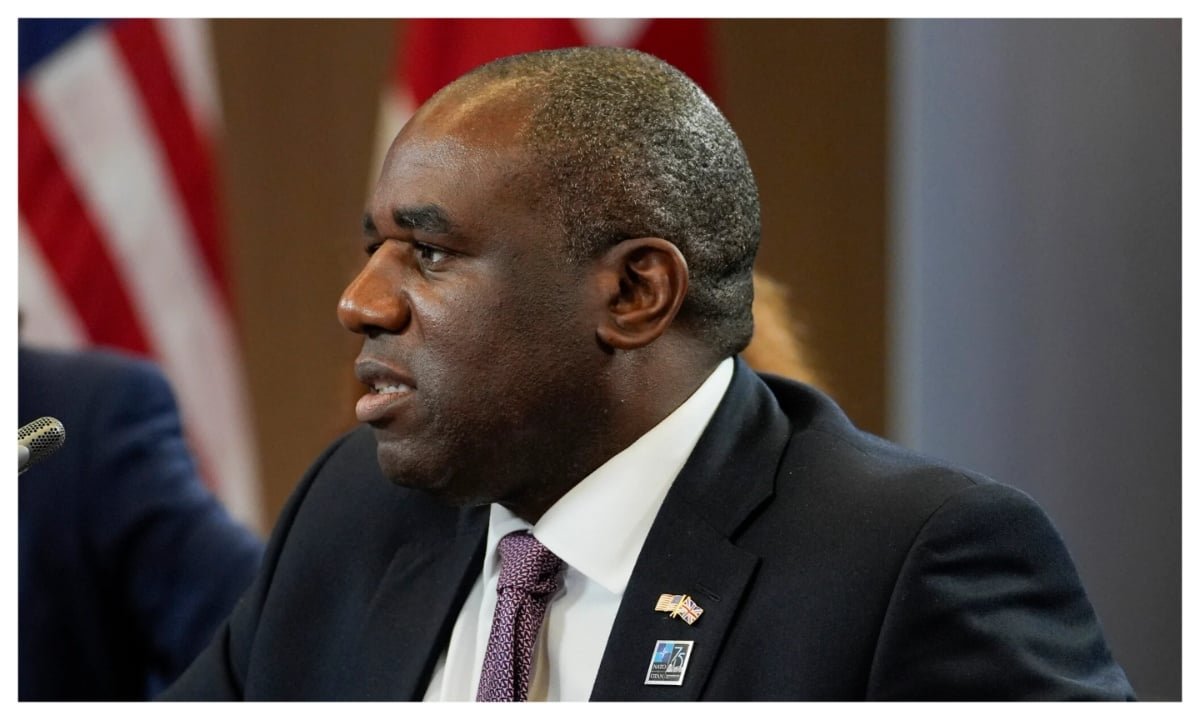
British Foreign Minister David Lammy has called on European nations to take decisive action by seizing frozen Russian assets, strengthening Britain’s position on how the West should handle Russian funds blocked since the invasion of Ukraine in 2022.
Addressing the British Parliament on Tuesday, Lammy insisted that Europe must act swiftly and move beyond simply freezing Russian assets to outright confiscation. He emphasized that such action cannot be taken unilaterally by any single government and urged a coordinated effort with European allies.
“Europe has to act quickly, and I believe we should move from freezing assets to seizing assets. It’s not an issue on which any government can act alone. We must act with European allies,” Lammy stated firmly.
His remarks mark a shift in Britain’s approach as pressure mounts on Western governments to provide more substantial financial and military support to Ukraine. Since Russian President Vladimir Putin ordered the invasion of Ukraine in 2022, the United States and its allies have imposed strict economic sanctions. These include blocking transactions with Russia’s central bank and finance ministry, effectively freezing between $300 billion and $350 billion in sovereign Russian assets.
The European Union estimates that approximately 210 billion euros ($220.58 billion) of these frozen assets are held within the bloc, predominantly in Euroclear, a Brussels-based securities depository.
Lammy’s call for seizing these funds aligns with growing international discussions on how best to leverage Russian assets to aid Ukraine’s reconstruction and ongoing defense. In a January parliamentary debate, the Foreign Office Minister for Europe, Stephen Doughty, affirmed that Britain is exploring all legal avenues to ensure Ukraine receives the financial support it urgently needs.
The proposal to confiscate Russian assets, however, raises complex legal and diplomatic questions. While some European nations share Lammy’s urgency, others remain cautious about setting a precedent for asset seizures. Critics warn that such measures could provoke retaliatory actions from Russia and challenge international property laws.
Despite these concerns, there is increasing momentum in the West to escalate economic pressure on Moscow. Lammy’s remarks reflect a broader consensus that the current measures are insufficient and that further action is required to deter Russian aggression while bolstering Ukraine’s resilience.
As the war in Ukraine continues, the debate over the fate of frozen Russian assets remains at the forefront of international policy discussions, with Britain pushing for stronger, more unified action across Europe.