

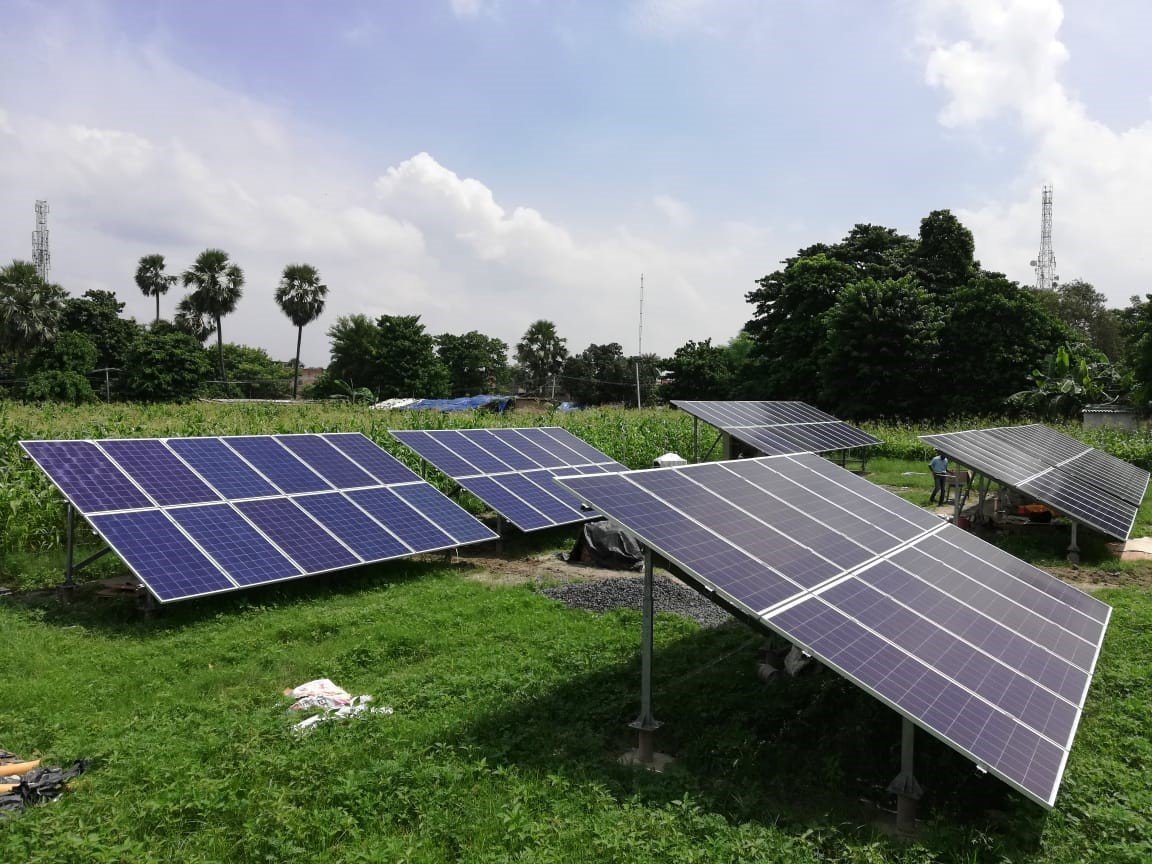
Nigeria’s renewable energy drive has recorded a major breakthrough. Government officials announced the commissioning of 91 mini grids across different communities. The achievement followed a promise made in February last year to deliver 60 mini grids within six months. Instead of meeting only the target, authorities surpassed it by almost 50 percent.
In that February meeting, officials faced tough questions about energy timelines. They refused to give a one-year roadmap and instead pledged visible progress in six months. Their commitments were ambitious. They promised 60 mini grids would be commissioned, 40 interconnected mini grids would be deployed, and solar projects would roll out in five universities. They also assured Nigerians that two university mini grids and one teaching hospital would be completed within that period. In addition, they vowed to begin solarizing public institutions.
Exceeding Expectations on Renewable Energy Delivery
Fast forward to today, and the results speak clearly. Against the 60 projected mini grids, 91 are already operational. This leap demonstrates stronger commitment to sustainable power and creates direct impact on rural and semi-urban communities. For many residents, consistent electricity is no longer a dream but a daily reality. As a result, businesses, schools, and households now run with more stability.
The achievement also shows the government’s capacity to deliver beyond expectations. Furthermore, it sets a new benchmark for renewable energy rollout in Nigeria. This success proves that ambitious renewable goals can be met with determined execution.
From Paper Promises to Real Change
The milestone is not just a statistic. Instead, it marks a visible shift in how energy access improves lives. Rural clinics that once battled power cuts now operate with steady supply. Teaching hospitals now move into active solar deployment. Universities are also recording progress as installations begin across campuses.
This transformation does more than provide light. It helps bridge a long-standing electricity gap in Nigeria. Families, traders, and local enterprises already benefit from the change, while the demand for wider deployment grows stronger.
Calls for Transparency and Future Accountability
Energy experts and citizens alike have taken note of the achievement. Advocates of renewable energy describe it as proof that mini grid technology is practical and scalable. Investors also view the success as a sign that Nigeria’s clean energy market holds serious potential.
However, celebrations go hand in hand with calls for accountability. Nigerians demand transparency on timelines and clarity on the next phases. With promises of eight universities and one teaching hospital set for completion within a year, stakeholders will watch closely. Therefore, officials must maintain momentum if they want to sustain public confidence.
A Rare Case of Promise Surpassed
For now, the figures remain impressive. The commissioning of 91 mini grids is not only a success story but also a bold sign of progress. Very few government promises end up exceeding expectations, but this one has. Consequently, the success has injected new confidence into Nigeria’s renewable energy ambitions. It may also reshape how future projects are planned and judged.