

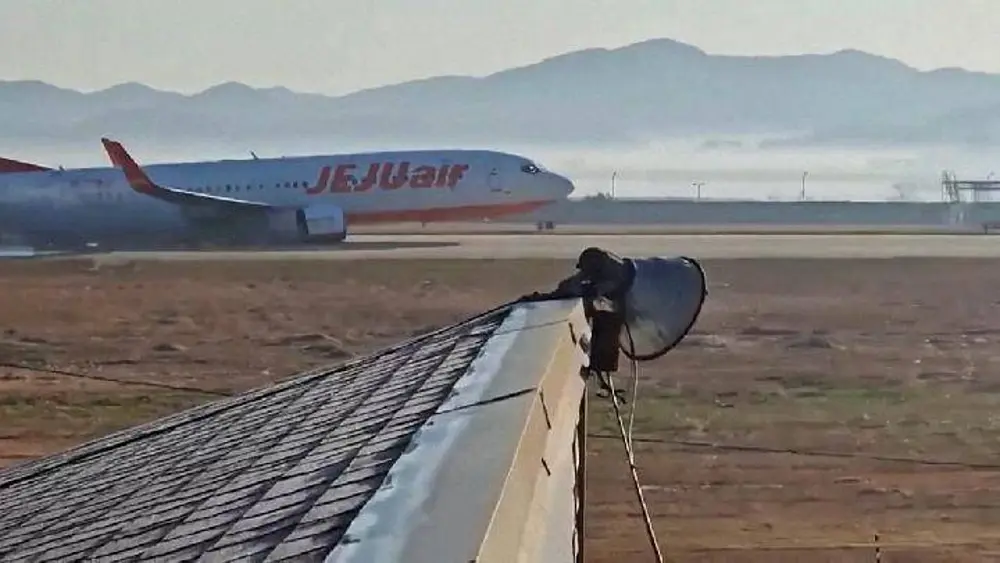
South Korea’s aviation safety concerns deepened on Monday as a Jeju Air flight from Seoul was forced to return to Gimpo International Airport due to a landing gear malfunction. This incident occurred just a day after the country experienced its deadliest plane crash in recent history, involving the same model of aircraft.
The Jeju Air Boeing 737-800 departed for Jeju Island at 6:37 a.m. but turned back less than an hour later when the aircraft’s monitoring system detected a landing gear issue shortly after takeoff. Despite additional measures that appeared to restore normal operation, the captain opted to return to the airport to ensure passenger safety and allow for a thorough inspection.
The latest incident comes in the wake of Sunday’s catastrophic crash involving another Jeju Air Boeing 737-800, which claimed 179 lives after a failed landing at Muan International Airport. The aircraft, carrying 181 passengers from Thailand to South Korea, issued a mayday call and attempted a belly landing before crashing into a barrier and erupting in flames. Only two flight attendants were recovered from the wreckage.
The South Korean Ministry of Transport has responded by announcing a comprehensive inspection of all 101 Boeing 737-800 planes operating within the country. This probe, expected to involve U.S. aviation experts and possibly representatives from Boeing, aims to uncover any systemic issues with the aircraft model. Joo Jong-wan, head of the aviation policy bureau, emphasized the urgency of rigorous safety measures in light of the incidents.
Adding to public apprehension, 21 passengers from Monday’s flight refused to board an alternate aircraft to Jeju, citing heightened safety concerns. Jeju Air, which operates a fleet predominantly consisting of Boeing 737-800s, has pledged full cooperation with the ongoing investigations.
As the nation grapples with the aftermath of these back-to-back aviation crises, authorities are under mounting pressure to reassure the public and prevent further tragedies. The focus remains firmly on identifying the root causes of the incidents and ensuring the highest standards of safety in South Korea’s skies.