In a move that has sent shockwaves through financial markets and global trade, President Donald Trump has announced sweeping tariffs on imports from Mexico, Canada, and China. These measures, he asserts, are necessary to rectify what he describes as decades of unfair trade practices that have left the United States economically disadvantaged. Acknowledging the likelihood of “short-term pain” for American businesses and consumers, Trump remains steadfast in his belief that these tariffs will ultimately benefit the nation by rebalancing trade relationships and bolstering domestic manufacturing. However, the repercussions of this bold economic policy have already begun rippling across the world, triggering stock market declines, currency fluctuations, and mounting concerns about a full-scale trade war.
The newly imposed tariffs include a 25% levy on goods imported from Mexico and Canada and a 10% duty on products from China. These three nations are the largest trading partners of the United States, accounting for a significant percentage of its imports. The broad scope of the tariffs means that a wide range of products, from automobiles to electronics, textiles, and agricultural goods, will be affected. This decision is part of Trump’s broader strategy to overhaul international trade practices, which he claims have systematically disadvantaged the United States. He has long argued that foreign nations, particularly China, have engaged in exploitative economic behaviors such as intellectual property theft, unfair subsidies, and currency manipulation, all of which have eroded American manufacturing and weakened economic self-sufficiency. By imposing tariffs, he hopes to force trading partners to renegotiate terms that are more favorable to the United States.
The reaction from global financial markets was swift and severe. U.S. stock futures dropped by nearly 2% following the announcement, signaling investors’ anxiety over the economic fallout of escalating trade tensions. Asian markets, including those in Tokyo, Seoul, and Sydney, also saw sharp declines, reflecting concerns over the impact of the tariffs on supply chains and export-driven economies. The Chinese yuan, Canadian dollar, and Mexican peso all weakened against the U.S. dollar, indicating a loss of confidence in the stability of these economies as they brace for potential retaliatory actions. Oil prices surged amid fears that the tariffs could disrupt energy supply chains, particularly as Canada and Mexico are major oil suppliers to the United States.
The economic community is deeply divided over the long-term effects of these tariffs. While some economists support Trump’s argument that aggressive trade policies could revitalize American industries and reduce dependence on foreign goods, others warn of serious unintended consequences. One immediate concern is the likelihood of increased consumer prices, as American businesses pass on the additional costs of imported goods to consumers. This is particularly concerning in sectors such as electronics, automobiles, and agriculture, where imported components and raw materials play a crucial role in production. The automotive industry is especially vulnerable, as supply chains are deeply intertwined across North America, with vehicle parts often crossing borders multiple times before final assembly.
Critics of the tariffs argue that rather than fostering economic growth, these measures could slow down global commerce, disrupt supply chains, and ultimately harm the very industries they are designed to protect. Some analysts predict that if the tariffs remain in place for an extended period, the United States could face stagflation—a scenario where inflation rises while economic growth stagnates, leading to higher unemployment rates and reduced consumer spending. This is particularly troubling given that consumer spending is a major driver of the U.S. economy, and any slowdown in purchasing power could have widespread repercussions.
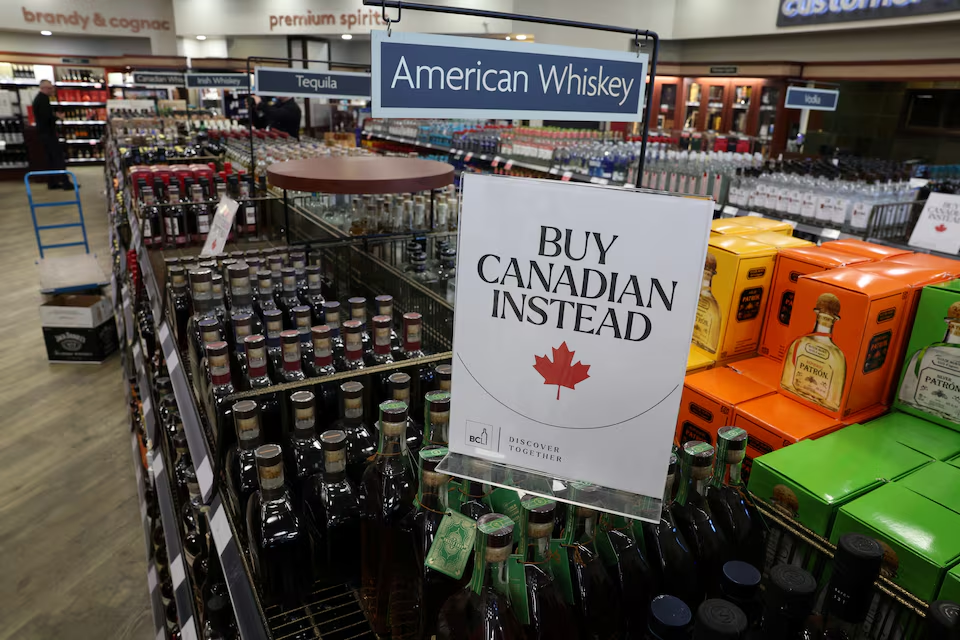
International reactions to the tariffs have been swift and pointed. Canadian Prime Minister Justin Trudeau has vowed to challenge the U.S. tariffs through international legal channels while also imposing retaliatory measures of his own. Canada has announced counter-tariffs on $155 billion worth of U.S. goods, targeting products such as peanut butter, beer, and lumber. Trudeau has condemned the tariffs as unjustified and harmful to both countries, emphasizing the deep economic integration between the United States and Canada. Mexico has also signaled its intention to impose retaliatory tariffs, with President Claudia Sheinbaum criticizing the U.S. approach to trade and migration issues. Sheinbaum argues that economic pressure will not solve complex problems such as illegal immigration and drug trafficking, and she has called for diplomatic negotiations rather than punitive economic measures.
China has responded with characteristic defiance, promising “corresponding countermeasures” and accusing the United States of violating World Trade Organization (WTO) rules. Beijing has a history of responding aggressively to U.S. trade actions, and analysts anticipate that China’s retaliation will target industries critical to the American economy, including agriculture, technology, and manufacturing. China may also leverage its position as a major holder of U.S. debt to exert financial pressure, raising concerns about potential economic instability.
Despite the growing backlash, President Trump remains resolute, dismissing concerns over potential economic downturns and emphasizing the need for a fundamental shift in global trade dynamics. He has signaled little interest in negotiations, stating, “They owe us a lot of money, and I’m sure they’re going to pay.” His administration appears prepared for a protracted economic standoff, with additional tariffs on European imports already being considered. The European Union, in response, has warned that it will not tolerate what it perceives as unfair trade practices and is prepared to impose its own countermeasures. European Commission officials have hinted at potential legal action through the WTO and have indicated that the EU will implement retaliatory tariffs if necessary.
As tensions escalate, businesses across various industries are bracing for the fallout. Major automakers, including Volkswagen, Ford, and General Motors, have expressed concerns about the disruption of supply chains and potential job losses. Energy companies are also facing uncertainty, particularly those that rely on crude oil imports from Canada and Mexico. Farmers, who depend on export markets in China, Mexico, and Canada, fear losing key buyers for their products as retaliatory tariffs take effect. The uncertainty surrounding these trade policies has led to cautious business investment, with companies delaying expansion plans until there is more clarity on the future of international trade relations.
The coming weeks will be critical in determining the trajectory of this trade conflict. Will diplomatic negotiations ease tensions and lead to revised trade agreements, or will the United States become embroiled in a full-scale trade war with its closest economic partners? With each country standing firm in its position, the global economy faces an uncertain future, and businesses, investors, and consumers alike are watching closely.
The stakes are high, and the outcome of these policies will shape not only U.S. foreign trade strategies but also global economic stability for years to come. As the world awaits further developments, one thing is clear: the impact of these tariffs extends far beyond Washington, influencing economies, industries, and everyday consumers worldwide.
Stay Informed
Stay informed with the latest news from Nigeria and beyond! Join us on WhatsApp or Telegram for real-time updates. Have a report or article? Send it to report@trendingnaijanews.com. Follow us on X (Twitter), Instagram, LinkedIn, YouTube, TikTok, and Facebook for more updates.