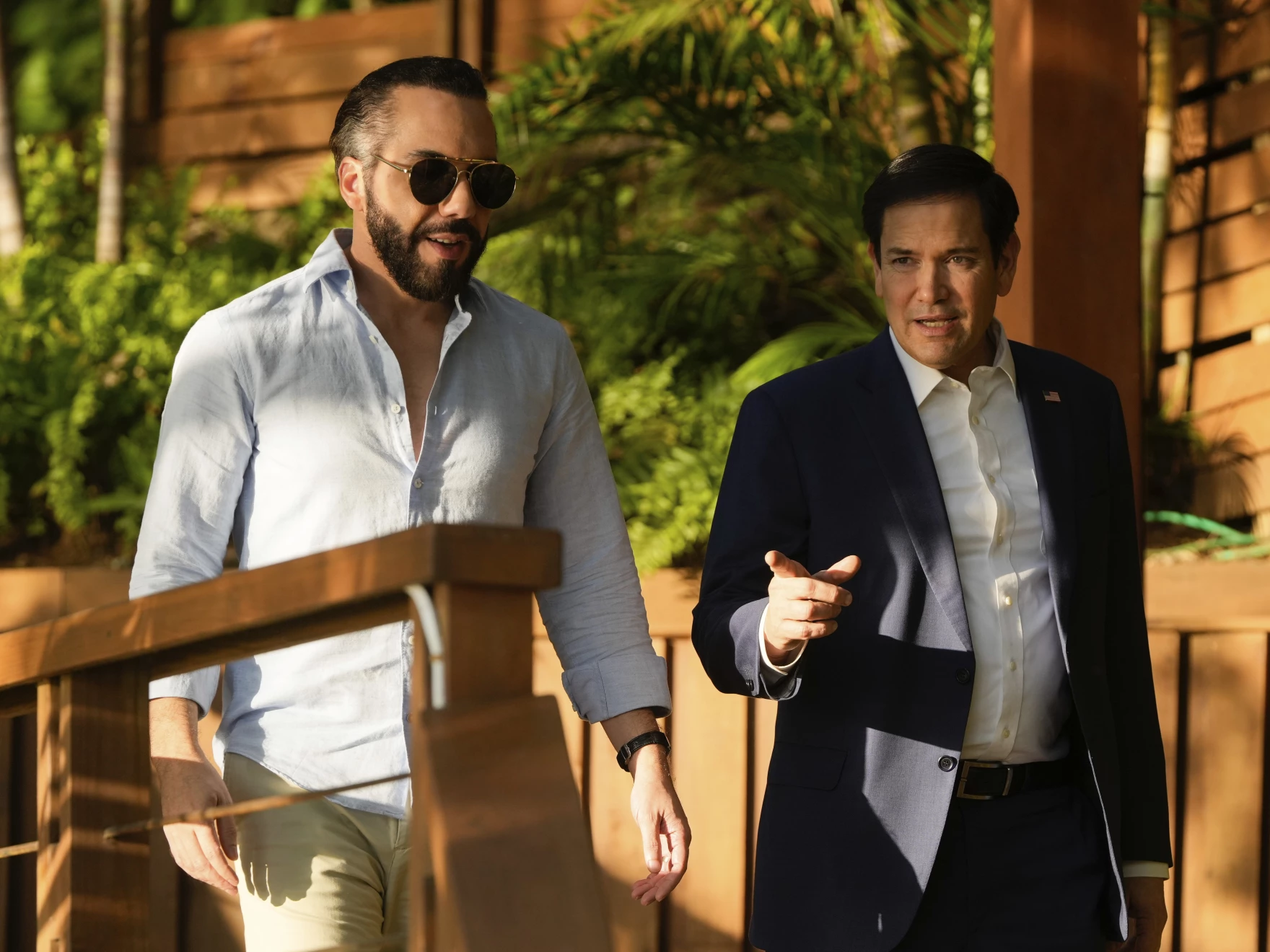
In a move that could dramatically shift the landscape of global migration policies, U.S. Secretary of State Marco Rubio announced late Monday that El Salvador has made a groundbreaking commitment to accept deportees from the United States, regardless of their nationality—including violent American criminals currently imprisoned in U.S. jails. The unprecedented offer was made by El Salvador’s President Nayib Bukele, marking an extraordinary turn in diplomatic relations between the two countries and presenting a potential challenge to existing international law regarding the treatment of deportees. Rubio, speaking at a signing ceremony for an unrelated civil nuclear agreement with El Salvador’s foreign minister, underscored the significance of the deal, calling it “extraordinary” and “unmatched anywhere in the world.” He stated that the Salvadoran president had agreed to accept both foreign nationals who have been arrested in the U.S. for violating immigration laws as well as U.S. citizens or legal residents convicted of violent crimes in the United States.
The offer from Bukele came after an extended meeting between him and Rubio at Bukele’s lakeside estate just outside of San Salvador, where the two leaders discussed not only migration enforcement but broader geopolitical issues. While the U.S. government cannot legally deport American citizens, Rubio’s announcement signals a dramatic diplomatic shift in the ongoing migration crisis. He noted that this arrangement would allow the U.S. to send non-Salvadoran migrants—those arrested on American soil for violating immigration laws—back to El Salvador instead of returning them to their country of origin, a strategy known as a “safe third country” agreement. This agreement would also include Venezuelan gang members convicted of crimes in the U.S., should Venezuela refuse to accept them, though Rubio emphasized that the Salvadoran government’s offer applies to detainees of any nationality.
While the U.S. government has made clear that there are no immediate plans to deport American citizens, the mere offer by El Salvador to accept U.S. convicts has raised alarm among legal experts and human rights groups. Under U.S. law, deporting American citizens would be constitutionally prohibited, making such a proposal highly controversial and likely to face significant legal challenges in American courts. Despite these obstacles, Rubio and the Trump administration are positioning the deal as a major step toward curbing illegal migration, one of the most pressing concerns of the current U.S. administration. Rubio has also made it clear that El Salvador’s cooperation on this front will be a key component of the Trump administration’s broader strategy to enforce stronger border controls and reduce the number of migrants reaching the United States.
This agreement comes as the Trump administration continues to press its regional partners to ramp up immigration enforcement. Rubio’s visit to El Salvador was part of a wider diplomatic tour aimed at securing commitments from Central American countries to accept deportees from the U.S. and to curb the flow of migrants to the American border. Just before arriving in San Salvador, Rubio observed a U.S.-funded deportation flight from Panama, carrying 43 migrants back to Colombia. The U.S. has been providing significant financial assistance to Panama and other regional partners to help manage the flow of migrants, totaling nearly $2.7 million for flights and tickets. The Trump administration has emphasized that these deportations are not only meant to manage the growing migrant crisis but also to send a strong message of deterrence to other potential migrants.
Meanwhile, the issue of China’s growing influence in Latin America also took center stage during Rubio’s diplomatic tour. In Panama, Rubio issued a direct warning to the Panamanian government that the U.S. would take action to reduce China’s presence in the Panama Canal. Rubio emphasized that the U.S. would not tolerate Chinese investment in the canal and suggested that the U.S. might take drastic measures to counter Beijing’s presence, a stance echoed by President Trump back in Washington. Trump has been vocal about his dissatisfaction with Panama’s agreement to allow China to increase its infrastructure investments in the region, particularly around the strategically important Panama Canal, which the U.S. relinquished control over in 1999.
While the diplomatic talks in Panama centered largely on countering China’s growing economic footprint, the discussions in El Salvador revolved around immigration and security cooperation. Rubio’s remarks also emphasized the critical role that Panama has played in accepting deportation flights from the U.S., which the Trump administration sees as a key step in curbing mass migration. Rubio stated that U.S.-Panamanian cooperation is essential to reduce the destabilizing effects of illegal migration, which he termed one of “the great tragedies of the modern era.”
However, the announcement of the immigration agreement between the U.S. and El Salvador has been met with criticism. Manuel Flores, the Secretary General of El Salvador’s opposition party, condemned the deal, describing it as a means for the U.S. to turn the country into a “dumping ground” for unwanted deportees. Human rights advocates have also raised concerns that such a plan could put vulnerable migrants at risk, as El Salvador is already grappling with its own internal issues related to crime and human rights. There are fears that the agreement could lead to further human rights abuses, especially as the Salvadoran government has been criticized for its inconsistent treatment of refugees and asylum seekers. These concerns underscore the complexities of the situation and the challenges involved in executing such an unprecedented migration deal.
Furthermore, in Washington, significant changes are unfolding in the administration’s approach to foreign aid. Amid the freeze on U.S. foreign assistance, the U.S. Agency for International Development (USAID) has undergone a dramatic shift, with many programs now under the control of the State Department. Rubio confirmed that some of the critical programs targeting illegal migration and crime in Central America would continue, albeit under a new structure. The restructuring has drawn criticism from many in Washington who believe it undermines the independence of USAID and will lead to further instability in the region.
As this historic immigration agreement takes shape, the broader implications for U.S. foreign policy and international law remain to be seen. While the Trump administration sees it as a significant step forward in curbing illegal migration, critics argue that the deal could violate fundamental legal principles and expose vulnerable migrants to further danger. As the situation develops, the eyes of the world remain on El Salvador and the U.S., waiting to see if this bold diplomatic move will set a new precedent or lead to a legal and political backlash that could reshape the future of international migration policy.
Stay informed with the latest news from Nigeria and beyond! Join us on WhatsApp or Telegram for real-time updates. Have a report or article? Send it to report@trendingnaijanews.com. Follow us on X (Twitter), Instagram, LinkedIn, YouTube, TikTok, and Facebook for more updates.