

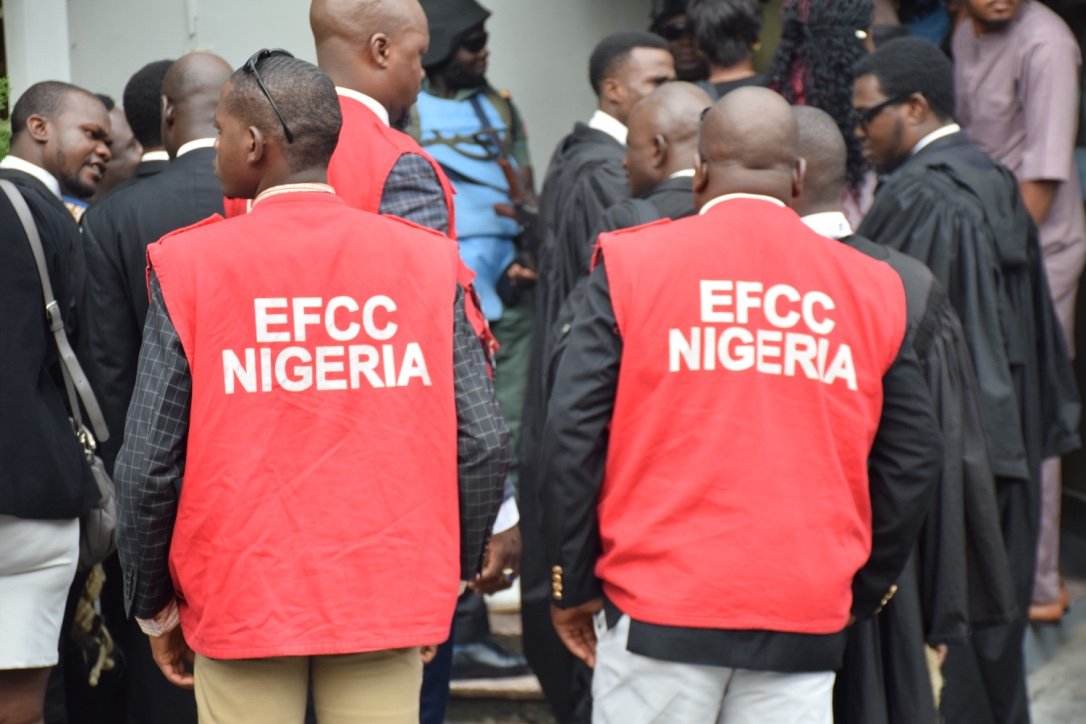
Lagos, Nigeria: In a significant legal move, Justice A. Owoeye of the Federal High Court sitting in Ikoyi, Lagos, on Monday, February 3, 2025, ordered the interim forfeiture of digital wallet assets valued at $222,729.86 to the Federal Government of Nigeria.
The assets, believed to be proceeds from illicit activities, were seized from an alleged syndicate of 792 cryptocurrency investment and romance fraudsters who were apprehended by operatives of the Economic and Financial Crimes Commission (EFCC) during a surprise operation on December 10, 2024, at 7 Oyin Jolayemi Street, Victoria Island, Lagos.
The decision came after an ex parte application filed and moved by Zeenat Atiku, the EFCC’s lawyer, which sought the interim forfeiture of the digital wallet assets. The application was grounded in Section 44 (2)(b) of the 1999 Constitution and Section 17 of the Advance Fee Fraud Act 2006. Atiku informed the court that the EFCC had received credible intelligence about a large-scale fraud operation involving foreign nationals with operations based in Lagos.
In her submission, Atiku disclosed that the syndicate used a company called Genting International Co. Limited (GICL) to fund their illegal activities. The EFCC argued that the digital wallet assets were reasonably suspected to be proceeds of unlawful activity.
After hearing the EFCC’s legal counsel, Justice Owoeye ordered the interim forfeiture of the digital wallet assets. The court also instructed the EFCC to publish the order in a national newspaper. This publication will inform the public and allow any parties with a legitimate interest in the assets to appear before the court within 14 days to show cause why the assets should not be permanently forfeited to the Nigerian government.
The matter is scheduled for further consideration on March 7, 2025, when the court will review the “compliance report” submitted by the EFCC. The court’s decision marks a crucial step in the ongoing fight against cryptocurrency-related fraud and financial crimes in Nigeria, with authorities taking swift action to prevent illicit funds from being funneled through digital assets.
This ruling highlights the Nigerian government’s commitment to tackling digital fraud, particularly those related to cryptocurrency investments and online romance scams. With the rise of digital currencies, Nigeria has seen an increase in such fraudulent activities, leading to greater vigilance by law enforcement agencies, especially the EFCC.
The government continues to monitor and regulate digital financial activities to prevent criminal syndicates from exploiting the country’s growing tech landscape.
To stay updated on more critical news surrounding fraud investigations and legal proceedings in Nigeria, subscribe to trendingnaijanews.com for real-time news, in-depth analysis, and expert insights on digital crimes, financial regulation, and government actions.