

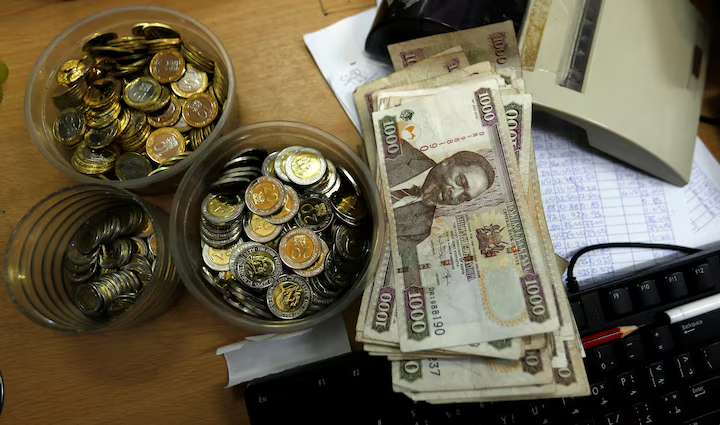
The Kenyan shilling remained steady against the U.S. dollar on Tuesday, holding firm at 128.90/129.40 per dollar—the same rate as the previous day. This stability has drawn attention from financial analysts, especially as many African currencies continue to struggle against the dollar amid economic uncertainties. Across the continent, major economies are experiencing significant currency depreciation, sparking concerns over inflation, rising costs of essential goods, and increasing debt burdens. While Kenya has managed to maintain some degree of stability, other nations are grappling with severe fluctuations that threaten economic stability and investor confidence.
In Nigeria, the naira has depreciated sharply, reaching ₦1,561.28 per U.S. dollar, a dramatic decline that underscores the country’s ongoing economic crisis. With inflation surging and oil prices fluctuating, Nigeria faces mounting pressure to implement urgent fiscal measures to prevent further erosion of its currency. Economic analysts warn that without immediate intervention, the naira’s continued depreciation could lead to a deeper financial crisis, making basic commodities more expensive for ordinary Nigerians and placing additional strain on businesses reliant on foreign exchange. The loss of investor confidence has also contributed to the weakening of the currency, as foreign investors remain wary of the instability surrounding Nigeria’s monetary policies.
Ghana’s cedi is also showing signs of strain, trading at GHS 15.34 per U.S. dollar. The country has been struggling with rising debt levels and economic stagnation, leading to increased concerns over its ability to stabilize the currency. Despite the Central Bank of Ghana’s efforts to tighten monetary policy and secure financial assistance from international lenders, the cedi continues to face downward pressure. The depreciation has made imports more expensive, driving up the cost of living and putting further stress on businesses that depend on imported raw materials and goods. The government has attempted to implement reforms to stabilize the economy, but the persistent decline in currency value suggests deeper structural issues that require long-term solutions.
South Africa is also feeling the weight of currency volatility, with the rand trading at ZAR 21.55 per U.S. dollar. A combination of socio-political instability, economic mismanagement, and a credit rating downgrade by international agencies has weakened the rand’s position in the global market. South Africa’s reliance on foreign trade means that a weaker rand makes imports more expensive, further fueling inflation and reducing the purchasing power of citizens. The economic slowdown has led to growing concerns about unemployment and poverty, as businesses struggle to cope with rising operational costs. Investors are increasingly cautious about South Africa’s economic outlook, and unless the government implements significant policy changes, the rand may continue to weaken, exacerbating financial instability in one of Africa’s largest economies.
Other African nations are experiencing similar currency depreciation trends. The Ugandan shilling has fallen to UGX 4,000 per U.S. dollar, while the Tanzanian shilling has weakened to TZS 2,350 per U.S. dollar. This widespread currency decline highlights a broader economic challenge facing the region, as inflationary pressures mount and governments struggle to maintain financial stability. Many African countries rely heavily on the U.S. dollar for trade and imports, making them vulnerable to fluctuations in the global market. The weakening of local currencies has led to a surge in the cost of essential goods such as fuel, food, and medical supplies, further straining household budgets and increasing the cost of living for millions of people. The situation is particularly dire in nations with high levels of external debt, as currency depreciation makes it more expensive to service loans, placing additional pressure on government budgets and limiting their ability to invest in critical infrastructure and social programs.
Despite the challenges facing many African economies, Kenya has managed to maintain some level of stability. The country’s diversified economic base has played a crucial role in buffering the shilling against significant fluctuations. Key export sectors, including horticulture, tea, and coffee, continue to generate foreign exchange earnings, providing a steady source of revenue to support the economy. Additionally, remittances from Kenyans living abroad have helped sustain the country’s foreign reserves, contributing to the shilling’s relative stability. While Kenya has avoided the sharp declines seen in other African currencies, experts warn that external pressures could still pose risks in the future. Inflation remains a concern, and global economic shifts could impact Kenya’s ability to maintain currency stability. The government will need to remain proactive in managing monetary policy to prevent potential volatility that could undermine economic growth.
The continued depreciation of African currencies against the U.S. dollar has far-reaching consequences, affecting businesses, governments, and ordinary citizens. The rising cost of imports has placed additional financial strain on households, making basic necessities increasingly unaffordable. For businesses that rely on imported materials and equipment, currency depreciation has led to higher production costs, reducing profitability and forcing some companies to scale back operations or lay off workers. The impact on government finances has also been severe, as many countries struggle to meet debt obligations amid declining currency values. With international financial institutions closely monitoring the situation, some governments are seeking external assistance to stabilize their economies and restore investor confidence.
The broader economic landscape in Africa remains uncertain, with many countries facing significant challenges in maintaining financial stability. Some governments are focusing on boosting local production and exports as a way to strengthen their economies and reduce dependence on foreign currency. Others are exploring stricter monetary policies and securing financial aid from global institutions to manage their economic crises. While Kenya’s shilling remains stable for now, the situation across the continent highlights the urgent need for comprehensive economic strategies to address currency fluctuations and ensure long-term financial sustainability. The ability of African nations to navigate these challenges will be critical in determining their economic resilience in the face of global uncertainties.
Stay informed with the latest news from Nigeria and beyond! Join us on WhatsApp or Telegram for real-time updates. Have a report or article? Send it to report@trendingnaijanews.com. Follow us on X (Twitter), Instagram, LinkedIn, YouTube, TikTok, and Facebook for more updates.