
A U.S. federal judge has issued a temporary restraining order against President Donald Trump’s executive directive aimed at stopping federal funding for gender-affirming medical treatments for individuals under the age of 19. The ruling, which has sparked widespread national debate, comes amid heightened legal battles over transgender rights and medical autonomy. The decision, delivered by Judge Brendan Hurson of the U.S. District Court for the District of Maryland, effectively suspends the enforcement of the controversial order and allows medical providers across the country to continue offering transition-related healthcare to minors without the immediate threat of losing federal support.
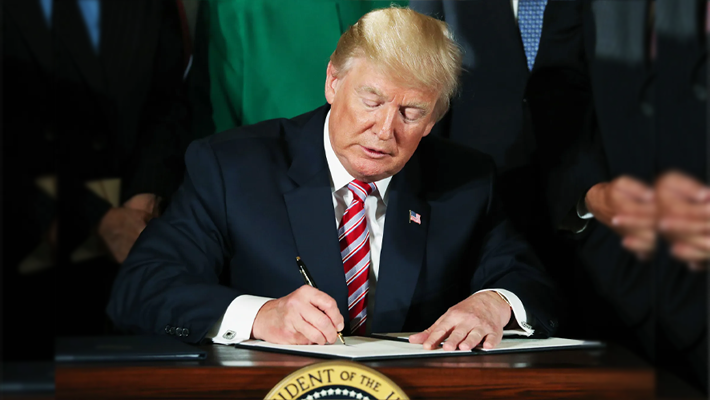
The executive order, signed by President Trump just hours after his return to the White House, sought to eliminate federal funding for hospitals and clinics that provide puberty blockers, hormone therapies, and gender-affirming surgeries to minors. The move was immediately met with backlash from civil rights organizations, medical professionals, and advocacy groups, who argued that the policy would endanger the well-being of transgender youths by restricting their access to necessary medical care. The lawsuit, filed by six transgender individuals aged 12 to 18, along with their parents and major LGBTQ+ advocacy organizations, challenged the constitutionality of the executive order, asserting that it violates the fundamental rights of transgender minors and their families.
In his ruling, Judge Hurson, who was appointed by former President Joe Biden, emphasized the significant risks posed by the policy. He stated that while the government’s argument for “protection” was acknowledged, the implementation of the order would, in reality, expose transgender minors to serious harm by depriving them of medically necessary treatments. The judge also pointed out that numerous major medical associations, including the American Medical Association and the American Academy of Pediatrics, have recognized gender-affirming care as essential for the mental and physical well-being of transgender individuals. He further noted that restricting access to such care could lead to severe psychological distress, an increased risk of suicide, and long-term health complications for those affected.
This ruling marks the second significant legal setback for the Trump administration’s broader policies aimed at limiting federal recognition of transgender rights. Earlier this month, another federal judge blocked a separate executive action that sought to prevent transgender individuals in federal prisons from receiving gender-transition treatments. That ruling, issued by Judge Royce Lamberth of the U.S. District Court for the District of Columbia, also struck down an attempt to prohibit transgender female inmates from being housed with cisgender women. The latest legal decision further complicates the Trump administration’s ongoing efforts to roll back transgender protections established under previous administrations.
The Trump administration’s push to curtail transgender rights has been met with fierce opposition from advocacy groups, Democratic lawmakers, and human rights organizations. Legal experts have argued that the administration’s actions could violate the Equal Protection Clause of the U.S. Constitution, as well as federal anti-discrimination laws. In response to the ruling, the American Civil Liberties Union (ACLU) and Lambda Legal, both of which are representing the plaintiffs, praised the court’s decision, calling it a critical victory for transgender rights and healthcare access. They maintained that the government should not interfere in the medical decisions of families and doctors, and that transgender minors deserve the same standard of care as any other patient.
While the restraining order temporarily halts the implementation of the executive order, the case is expected to continue through the courts in the coming months. The Department of Justice has indicated that it will appeal the ruling, with legal analysts predicting that the case could eventually reach the Supreme Court, given its significant implications for federal policies on gender identity and healthcare. In the meantime, transgender minors and their families can continue to access gender-affirming medical treatments without the immediate threat of federal funding cuts. However, the ongoing legal battle underscores the deep divisions in the U.S. regarding transgender rights, medical ethics, and the role of government in personal healthcare decisions.
Public reactions to the ruling have been deeply polarized. Supporters of the court’s decision argue that the executive order represented a dangerous and discriminatory policy that undermined the rights of transgender individuals. They believe the ruling reaffirms the principle that healthcare decisions should be made by medical professionals and families, not by politicians. On the other hand, conservative groups and allies of the Trump administration have criticized the ruling, claiming that it prioritizes ideology over the protection of children. Some Republican lawmakers have called for new legislative efforts to restrict gender-affirming treatments for minors, while others have vowed to introduce state-level policies to counteract the ruling.
As the debate over transgender healthcare continues to unfold, the legal battle over this executive order is likely to set a precedent for future cases involving gender identity, civil rights, and government intervention in medical treatment. The ruling is also expected to influence upcoming political campaigns, with candidates from both parties taking strong stances on the issue as they appeal to their respective voter bases.
Stay informed with the latest news from Nigeria and beyond! Join us on WhatsApp or Telegram for real-time updates. Have a report or article? Send it to report@trendingnaijanews.com. Follow us on X (Twitter), Instagram, LinkedIn, YouTube, TikTok, and Facebook for more updates.