

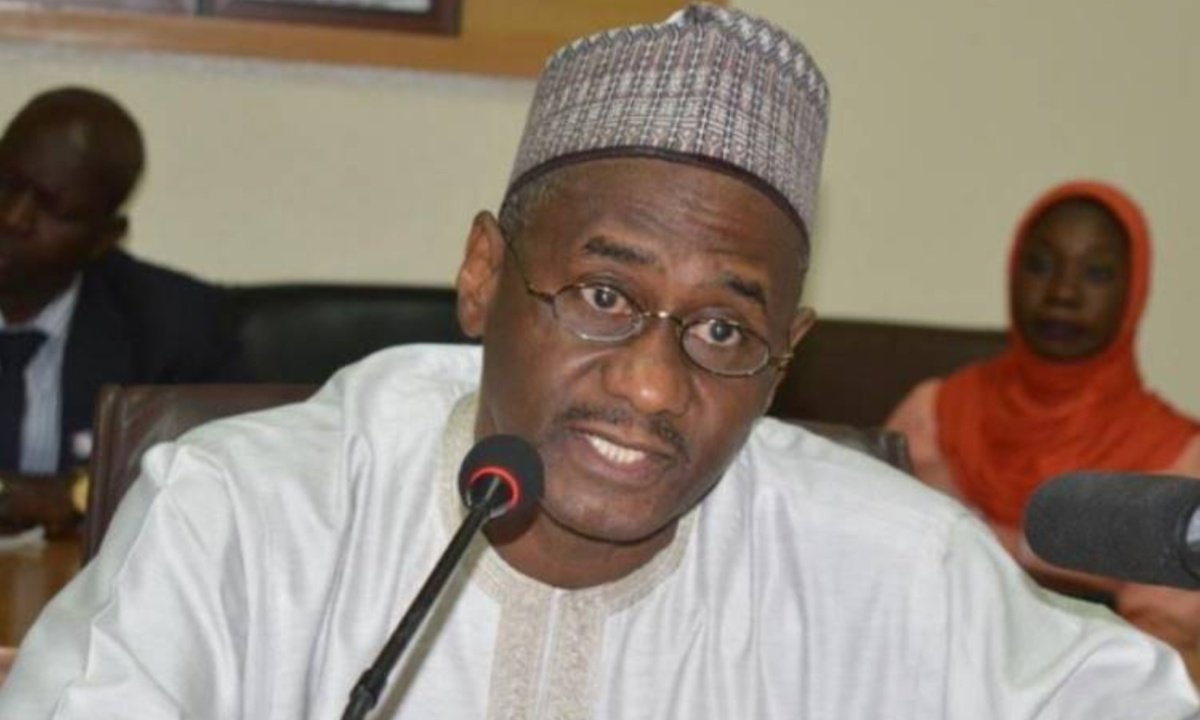
The ongoing legal battle involving Professor Usman Yusuf, the former Executive Secretary of the National Health Insurance Scheme (NHIS), has taken another twist as the Federal Capital Territory High Court in Kuje has adjourned his arraignment until February 3, 2025. The delay, which occurred on Thursday, followed the decision of the court to allow for amendments to the charges brought against Yusuf by the Economic and Financial Crimes Commission (EFCC). Yusuf had been arrested by the EFCC on Wednesday, and he was brought to court the following day, expecting to be formally arraigned on serious allegations of financial mismanagement involving N919 million.
In a statement issued by the EFCC’s spokesperson, Dele Oyewale, it was explained that the postponement was necessary to enable further amendments to the charges against Yusuf, which the prosecution felt were required for a more thorough presentation of the case. The arrest and the pending charges stem from a petition that was submitted to the federal government during the administration of former President Muhammadu Buhari, detailing alleged fraudulent activities linked to Yusuf’s tenure at the helm of the NHIS.
The EFCC, which is responsible for investigating and prosecuting corruption and financial crimes in Nigeria, has been at the forefront of this case, which has attracted widespread attention due to Yusuf’s position as a former government official. Yusuf, who held the position of Executive Secretary at NHIS for several years, is accused of using his office to mismanage public funds and engage in other fraudulent activities. The amount in question—N919 million—was allegedly mishandled during his administration of the health insurance scheme, a program that is supposed to improve healthcare access for millions of Nigerians.
In Thursday’s court session, Yusuf’s defence team, led by Isah Dokto Haruna, applied for bail on behalf of the accused. However, the court, citing the deferred arraignment, decided to deny the bail application. Justice Chinyere E. Nwecheonwu, who is presiding over the case, ruled that Yusuf should remain in the custody of the EFCC until the next court date, which is now set for February 3, 2025. This decision came after a review of the case and consideration of the need for a complete legal process, particularly in light of the revised charges.
The developments in Yusuf’s case have drawn significant attention from the public, particularly as they involve allegations of financial misconduct at a time when public trust in government officials and institutions is fragile. Yusuf’s arrest and the subsequent court proceedings are seen by many as part of the wider anti-corruption effort by the EFCC to hold high-ranking public servants accountable for their actions in office. These proceedings have the potential to set a significant precedent for future corruption cases involving top government officials.
Yusuf’s troubles began in 2019 when he was removed from his post as the Executive Secretary of the NHIS, following a recommendation for his dismissal from a fact-finding panel set up by the Federal Ministry of Health. The panel’s investigation had unearthed numerous allegations of mismanagement and financial improprieties during Yusuf’s tenure. Among the most notable accusations was the alleged mismanagement of over N919 million, funds that were intended for the advancement of Nigeria’s national health insurance program. The accusations also included allegations of administrative incompetence and failure to adhere to established guidelines and regulations.
The fact-finding panel’s recommendation for Yusuf’s dismissal came after several months of internal disputes within the NHIS, which had been embroiled in controversy over how funds were allocated and used. Yusuf, who has maintained his innocence throughout the investigation, was relieved of his duties by the Buhari administration in what many saw as a move to restore credibility to the NHIS. However, despite his removal, the case has continued to hang over his head, culminating in the current legal proceedings.
The upcoming court session on February 3, 2025, will be a critical moment in this high-profile case, as it could lead to either a full trial or a potential resolution of the charges against Yusuf. The outcome of this case is likely to have significant implications not only for Yusuf’s career and future but also for the ongoing fight against corruption in Nigeria’s public sector.