

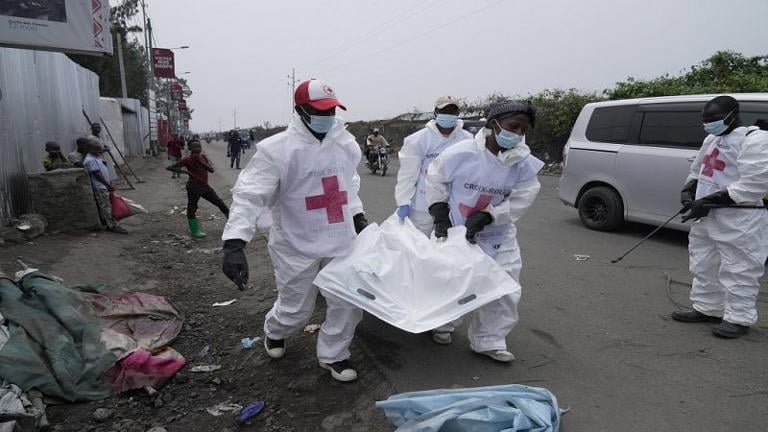
The situation in the Democratic Republic of Congo (DRC) continues to spiral into an even more devastating crisis, as the death toll from clashes between DRC government forces and the M23 rebel group has surpassed 700 in less than a week. This alarming surge in casualties has prompted widespread international concern. On Saturday, the DRC’s health ministry confirmed that, as of Thursday, 773 bodies had been recovered and identified in hospital morgues in and around Goma, the capital of North Kivu province. This number marks a significant increase from only 71 deaths reported earlier this week, following the M23’s takeover of Goma on Monday.
The M23 rebel group’s advances into key territories have now sparked a humanitarian emergency, especially in Goma, which has become a battleground due to its proximity to vast deposits of natural resources such as gold, tin, and coltan—minerals highly sought after by international markets. This makes Goma a significant strategic point, not just for the rebels, but also for the government of Congo, international organizations, and multinational corporations with interests in the region.
As violence escalates, the humanitarian toll is mounting. Stephane Dujarric, the spokesperson for the United Nations (UN) Secretary-General, reported that over 2,800 people have been injured as a result of the clashes. Dujarric warned that this figure is expected to rise as the violence continues to intensify and spread. With infrastructure in shambles, the provision of medical care and basic necessities for the injured and displaced becomes increasingly difficult.
Humanitarian agencies working in the area, including the UN, have reported widespread looting of aid offices and warehouses, further hampering their efforts to deliver crucial aid to the affected population. This not only prolongs the suffering of those caught in the conflict but also further destabilizes an already fragile region that has been struggling with the effects of multiple armed conflicts for years.
The root cause of the violence lies in the long-standing accusations from the M23 rebel group against the DRC government, accusing it of failing to honor past peace agreements. These allegations have compounded the mistrust between the two sides and, in part, explain the rebel group’s growing support base among certain segments of the population in eastern Congo. M23’s primary objective is to reclaim territory they believe is rightfully theirs, as well as to secure control over lucrative resource-rich regions. The group is also believed to have support from neighboring Rwanda, adding further complexity to the situation.
Despite the massive losses in human life and suffering, there has been no immediate sign of the conflict easing. Jean-Pierre Lacroix, the UN’s Under-Secretary-General for Peace Operations, indicated that the M23 rebels are rapidly advancing and appear to be heading toward the provincial capital of Bukavu, in South Kivu. Lacroix described the rebels’ movements as “quite fast,” signaling that more areas could fall under their control in the near future, further exacerbating the crisis and extending the humanitarian nightmare across the region.
The political dimensions of the crisis have prompted alarm both in the region and abroad. With both DRC and Rwanda having long histories of tension, especially related to the presence of rebel groups in the border areas, the involvement of external forces complicates peace efforts. In addition, the international community, including the African Union, is grappling with the effectiveness of peacekeeping forces in containing the violence and preventing further casualties.
While efforts are underway to broker peace and provide relief to affected populations, the scale of the crisis is overwhelming. Thousands of civilians have been displaced by the fighting, and many have fled to refugee camps in neighboring countries like Uganda and Rwanda, adding strain to already resource-limited regions.
As the situation in the DRC continues to worsen, it remains to be seen whether international diplomatic pressure will succeed in curbing the M23’s advances or if the conflict will escalate into a broader regional war. The international community, including the UN and aid agencies, is calling for greater cooperation between governments to address the root causes of the conflict and prioritize the delivery of humanitarian aid.
The road ahead remains fraught with uncertainty, but the international community must act swiftly to address the humanitarian disaster unfolding in eastern Congo. The people of DRC, who have long suffered the consequences of violence and political instability, are once again bearing the brunt of a crisis that seems without end.
Stay informed with the latest news from Nigeria and beyond! Join us on WhatsApp or Telegram for real-time updates. Have a report or article? Send it to report@trendingnaijanews.com. Follow us on X (Twitter), Instagram, LinkedIn, YouTube, TikTok, and Facebook for more updates.