

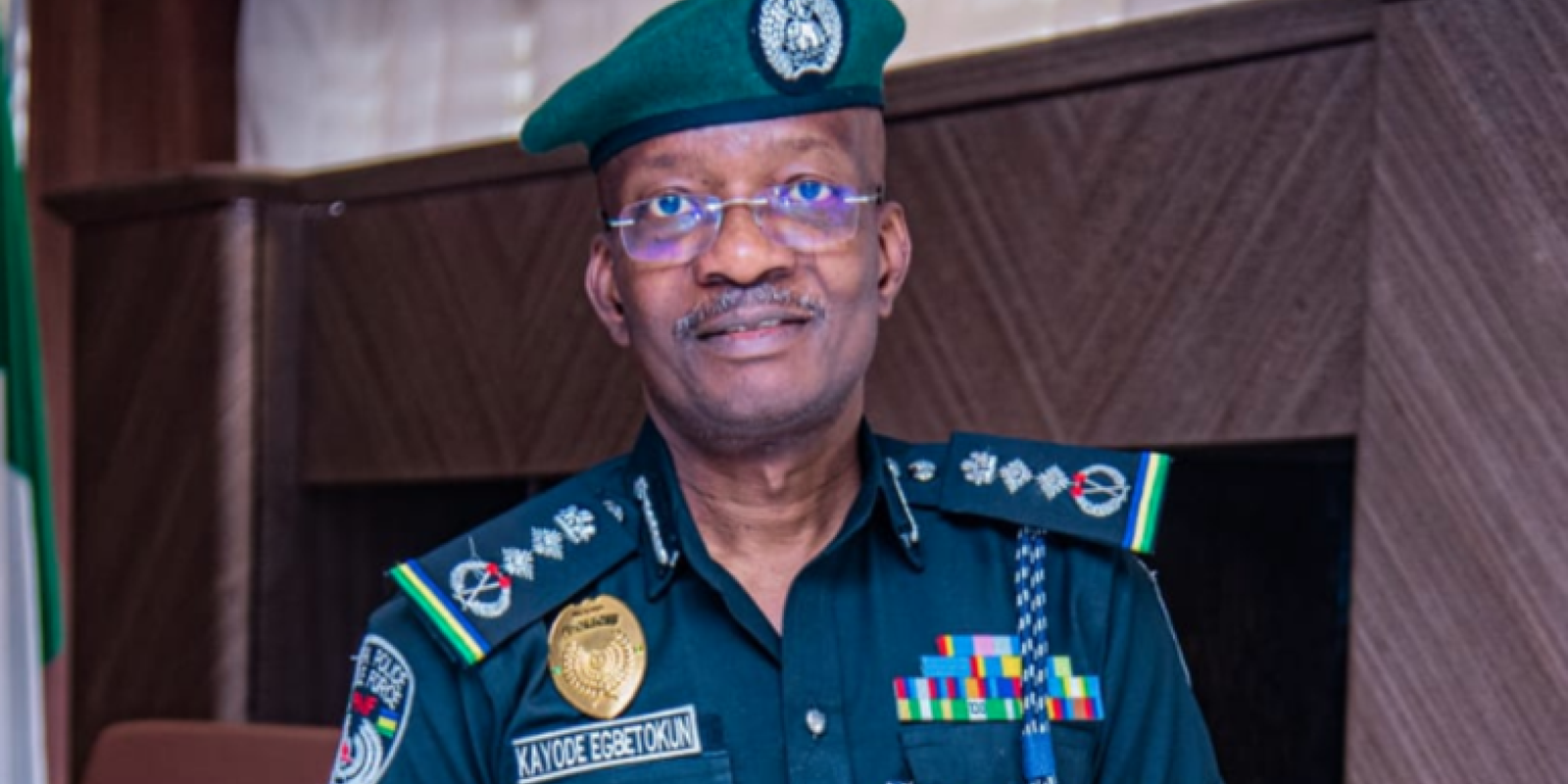
The controversy surrounding the alleged disappearance of 3,907 assault rifles from police armouries has escalated as the Inspector General of Police, Kayode Egbetokun, formally requested a private session with the Senate Panel on Public Accounts. The request follows the findings of the 2019 Audit Report by the Auditor-General for the Federation, which claimed that as of January 2020, thousands of firearms were either missing or unaccounted for in the custody of the Nigeria Police Force. The report raised serious questions about security lapses and accountability within law enforcement, sparking nationwide concern and prompting the Senate to launch an official probe into the matter.
Egbetokun, in a letter addressed to Senate President Godswill Akpabio, expressed deep reservations over the public nature of the Senate hearings on the issue. He stressed that sensitive security matters should be handled with the utmost discretion to prevent misinformation and undue speculation that could damage both national security and the international perception of Nigeria’s policing system. He argued that deliberating on such critical security concerns in an open forum could send the wrong signals to both the Nigerian public and the global community, potentially undermining public trust in law enforcement agencies. He emphasized that a closed-door session would allow for more candid discussions and ensure that the findings do not lead to unnecessary panic or misrepresentation of facts.
The police chief dismissed the conclusions of the Auditor-General’s report as inaccurate and misleading, insisting that the police force has been unfairly portrayed in the matter. He argued that the audit process did not adequately reflect the realities of police operations and inventory management. He also expressed dissatisfaction with how the Senate Committee on Public Accounts had conducted the hearings, stating that the public exposure of the issue created a perception of negligence within the force, which he described as both unfair and damaging. He maintained that rather than being a case of outright disappearance, the firearms in question could be accounted for through a more thorough internal review, which the police are currently conducting.
Egbetokun appealed for more time to conduct an extensive investigation within the police force to verify the actual status of the firearms. He assured the Senate that the police leadership was committed to transparency and accountability and that any discrepancies in the records would be rectified. He reiterated that the police force has stringent procedures for handling firearms and that any irregularities in documentation should not automatically be interpreted as evidence of misconduct or mismanagement. He also urged the Senate to exercise caution in drawing conclusions that could erode public confidence in the police, especially at a time when national security challenges require a strong and united front among all law enforcement agencies.
Despite the police chief’s plea for a private hearing, Senate Deputy Whip Onyechachi Nwoebonyi, who presided over the session in the absence of Committee Chairman Aliyu Wadada, directed the police to reappear before the Senate the following Monday with a more detailed and convincing explanation. The committee remained firm on its stance that transparency in governance is crucial and assured Nigerians that the investigation would be conducted without bias or external influence. While acknowledging the police’s concerns about security sensitivities, the committee maintained that the public had a right to know the details of the missing firearms and how the issue was being handled at the highest levels of government.
Within police circles, there is growing frustration over the way the matter has been handled, with some senior officers privately expressing concerns that the controversy has been exaggerated to paint the police in a negative light. There is speculation that the issue is being politicized, with certain interests within the government and security sector seeking to use it as an opportunity to question the credibility of the police leadership. Some officers argue that the missing firearms narrative does not accurately represent the operational realities of the police force, where weapons are regularly reassigned, transferred, or temporarily stored in ways that may not always immediately reflect in central inventory records.
Egbetokun reaffirmed his commitment to working closely with the National Assembly to implement necessary reforms that will enhance both the efficiency and accountability of the police force. He assured lawmakers that he remained open to scrutiny and willing to cooperate with all legitimate inquiries aimed at strengthening the nation’s security framework. He emphasized that, beyond the immediate controversy, there is a need for broader discussions on how to modernize the police’s tracking and inventory systems for arms and ammunition to prevent similar issues in the future. He also highlighted the importance of collaboration between the police and other security agencies to improve intelligence-sharing mechanisms and overall national security coordination.
Senate President Godswill Akpabio, in response to the IGP’s request, stated that the police leadership’s concerns had been noted and that due consideration would be given to the issue of closed-door hearings. He acknowledged the importance of maintaining the balance between security and public accountability and assured that the Senate would take all necessary steps to ensure a fair and thorough investigation. He confirmed that while the police would be allowed to conduct their internal review, the Senate would continue its independent probe to verify the facts and determine the next course of action.
As the controversy unfolds, public interest in the case has surged, with many Nigerians eager to see how the investigation will be handled. The issue has sparked debates on social media, with some commentators questioning whether the missing firearms pose a potential threat to national security. Others have called for a broader examination of how weapons are managed across all security agencies, arguing that the police should not be singled out when similar accountability concerns exist in other branches of the nation’s security architecture. Some critics have pointed to past incidents where missing arms have resurfaced in the hands of criminals, fueling concerns about illicit arms circulation in the country.
The outcome of this investigation will be crucial not only for the credibility of the police force but also for the broader question of security sector accountability in Nigeria. If the police successfully provide a compelling explanation, it could help restore confidence in their leadership and operational integrity. However, if discrepancies persist, it may further erode public trust and raise serious concerns about oversight mechanisms within the force. With tensions rising and the pressure mounting, all eyes are now on the Nigeria Police Force and the Senate to see how this high-stakes issue will be resolved.
Stay informed with the latest news from Nigeria and beyond! Join us on WhatsApp or Telegram for real-time updates. Have a report or article? Send it to report@trendingnaijanews.com. Follow us on X (Twitter), Instagram, LinkedIn, YouTube, TikTok, and Facebook for more updates.