LAGOS – Nigeria’s Finance Minister has issued one of the sharpest warnings of the Tinubu era on petrol pricing, telling the country that even the suggestion of bringing back the fuel subsidy could send the naira tumbling to as low as N4,000 to the dollar.
Taiwo Oyedele, the Minister of Finance and Coordinating Minister of the Economy, made the remarks on Monday, October 19, 2026, while speaking to journalists on the sidelines of the International Monetary Fund and World Bank Annual Meetings in Bangkok, Thailand. By Tuesday morning, the comments were circulating across Nigerian news platforms and social media, and they had become a major talking point among traders, economists and ordinary Nigerians worried about the price of petrol.
According to reports of the briefing, the minister said that if the President were merely to say the government was considering a return of the subsidy, investors would react at once. He described a chain reaction in which capital would leave the country, confidence would erode, airfares would struggle and the naira would come under severe pressure. He put the possible range of the currency’s fall at 3,000, 3,500 or even 4,000 naira to the dollar. His most pointed argument was that the very fuel Nigerians want subsidised would end up costing far more in naira terms, because a weaker currency raises the price of imported petroleum products.
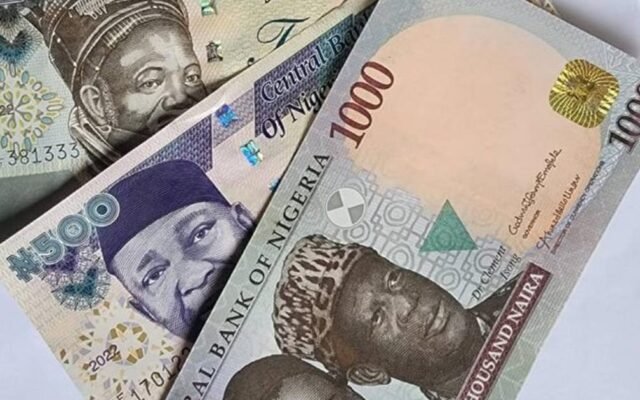
To appreciate the weight of that statement, it helps to look at where the naira stands today. At the official window regulated by the Central Bank of Nigeria, the currency has traded at around N1,332 to the dollar for much of the past fortnight, moving only by a few kobo or a naira or two from day to day. On the parallel market, dealers were quoting roughly N1,370 to N1,390 on Tuesday. So the minister is not describing a modest dip. He is describing a collapse of roughly two to three times the current value, the kind of fall that would reset the price of nearly everything Nigerians buy.
The timing is also notable. The warning comes just as the naira has been enjoying one of its steadier stretches in years. Official data show Nigeria’s external reserves rose to about $58.81 billion on October 12, the highest level since November 2008. A day before the minister spoke, Deutsche Bank added Nigeria to its frontier currency monitor and described the naira as undervalued, pointing to attractive carry and positive real interest rates. The German lender did, however, name the fiscal position as the main risk to its outlook, including the pressure that government borrowing and bond sales ahead of a vote in January could create.
Seen in that light, Oyedele’s message looks aimed squarely at markets as much as at the public. Foreign portfolio investors who have been drifting back into Nigerian assets want assurance that the reforms launched in 2023 will not be reversed. The removal of the fuel subsidy, announced by President Bola Tinubu at his inauguration, and the unification of exchange rates were the two pillars of that reform programme. For years, the subsidy consumed trillions of naira that the government could have spent on roads, schools and hospitals, and it drained foreign exchange because Nigeria was importing refined petrol. The minister’s warning is a reminder to investors that the administration regards both pillars as untouchable.
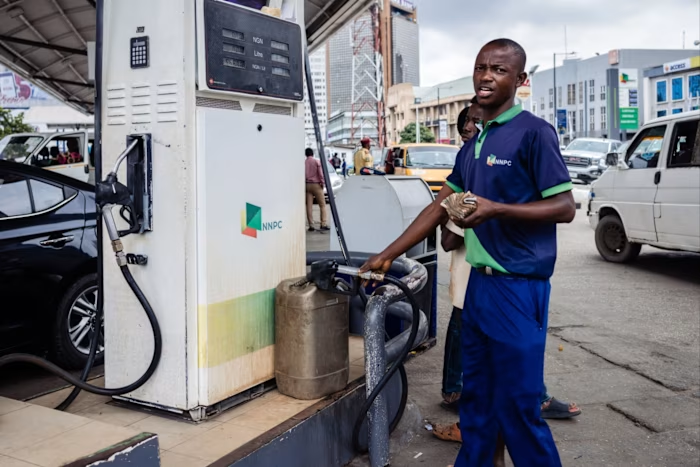
Not everyone will be comforted. The reality on the ground is that petrol is still expensive. Reports in early October put pump prices in a wide range between N1,350 and N1,430 per litre depending on location and the marketer, with some stations having reduced prices slightly in recent weeks. Global crude prices have also stayed elevated, which keeps the cost of imported fuel high. For a commuter in Lagos or a trader moving goods from Kano to Onitsha, that translates into higher transport fares and higher shelf prices.
That is where the political difficulty lies. Public pressure for relief has been building. Reports in early October said public service workers had declared a three day warning strike over worsening economic hardship, and a recent Central Bank survey found that households grew more pessimistic about prices and their finances in September even as business activity improved. When families feel squeezed, calls for the government to step in on fuel prices are never far away, and with elections on the horizon, politicians know that petrol prices can swing votes.
The minister’s answer is essentially that relief through subsidy would be a trap. In his reading, the cost of reversing course would not be borne only by the treasury. It would show up in the exchange rate, and the exchange rate touches every household through the price of food, medicine, school supplies and electronics.
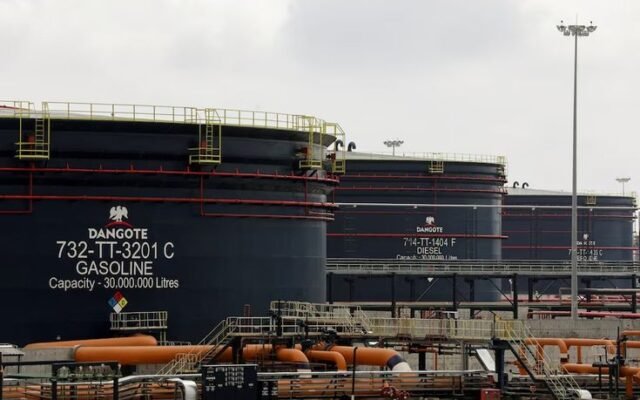
There is economic logic behind this argument, and independent analysts have made versions of it for years. Nigeria still depends heavily on imported refined products, though the Dangote refinery and other local plants have begun to change that picture. When the currency weakens, the naira cost of imported petrol rises automatically. A subsidy that holds pump prices down would require the government to spend more naira on every litre, and if the naira is falling, the bill grows even faster. Economists call this a fiscal and currency spiral, and Nigeria has lived through versions of it before, in the years when subsidy payments ballooned and foreign exchange became scarce.
Still, the N4,000 figure is a worst case scenario rather than a forecast, and readers should treat it that way. The minister was making a point about how markets might react to a policy reversal, not announcing a prediction that the naira is heading there. No official has said the government is planning to bring back the subsidy, and the reports of the briefing do not indicate that the question arose from any concrete proposal. What the warning does show is how seriously the economic team regards the risk of policy credibility being damaged.
The monetary backdrop adds another layer. On September 22, the Central Bank cut its benchmark Monetary Policy Rate by 350 basis points, from 26.5 per cent to 23 per cent, while keeping the cash reserve requirement for banks at 45 per cent. Headline inflation, meanwhile, fell to 14.63 per cent in September, its lowest level since October 2020. Taken together, the cooling prices, the cheaper policy rate, the strong reserves and the stable naira form the strongest macroeconomic picture the country has presented in some time. The minister clearly wants to protect it.
What happens next will depend on several factors. The first is how the Presidency and the political class respond. If the message that the subsidy is not coming back is repeated clearly and consistently, markets are likely to stay calm. The second is the path of global oil prices, since any fresh surge would make pump prices harder to bear. The third is the naira itself, which analysts expect to hold within a relatively narrow band this month, though a sudden shift in investor mood could change that quickly. The fourth is the October inflation report due in mid-November, which will show whether the recent slowdown in price increases has continued.
For ordinary Nigerians, the message from Bangkok is both reassuring and uncomfortable. It is reassuring because it signals that the government intends to defend the stability of the naira. It is uncomfortable because it also means that the days of artificially cheap petrol are not coming back, whatever the pressure at the pump. The challenge for policymakers now is to find other ways of easing the burden, whether through transport support, social transfers or faster rollout of cheaper alternatives such as compressed natural gas, without reopening the subsidy door.
The minister has drawn a clear line. Whether the public and politicians accept it, in an election season and in a cost of living squeeze, is the question that will define the economic conversation in the weeks ahead.