

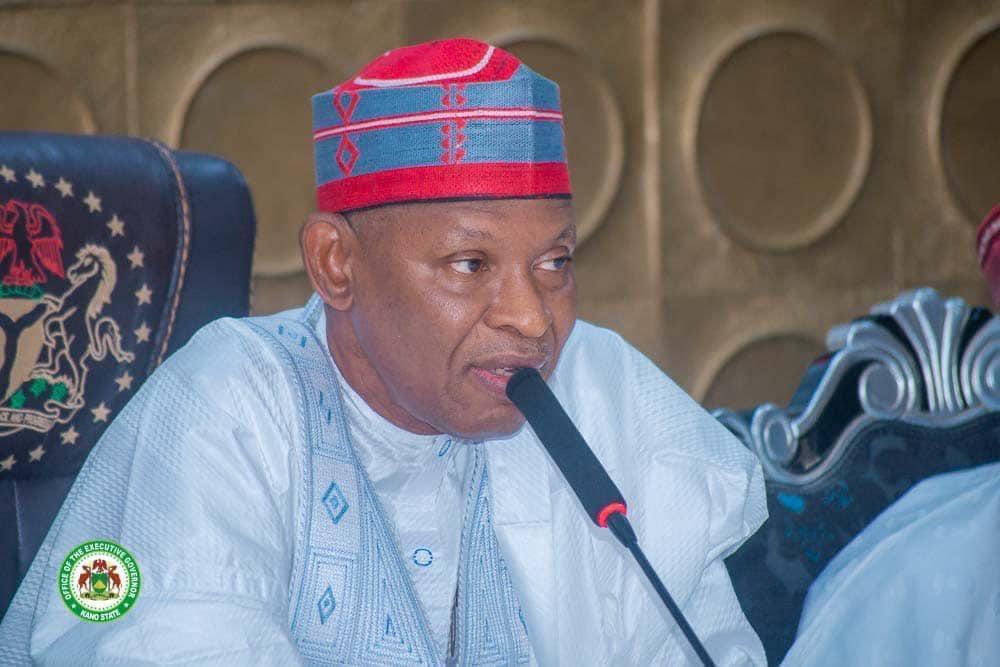
Kano State Governor, Abba Kabir Yusuf, has formally inaugurated the newly appointed Chairmen, Commissioners, and members of the Sharia and Zakkat & Hubusi Commissions. This key development signals the start of a focused effort by the state government to improve Islamic governance while enhancing social welfare programs for the less privileged. The announcement was made through a statement issued by the governor’s spokesperson, Sanusi Bature Dawakin Tofa, on Monday, shedding light on the appointments and the crucial roles these commissions will play in shaping the state’s future.
Governor Yusuf, during the inauguration ceremony, reiterated that these appointments were made based on merit, competence, and trustworthiness. He expressed his confidence that the new appointees possess the necessary qualities and qualifications to effectively fulfill their responsibilities. The governor’s faith in the newly appointed officials reflects his belief that their work will not only strengthen governance structures but also lead to significant advancements in social and economic welfare across the state. With his directive to both commissions, Governor Yusuf is focused on ensuring peace, stability, and development through Islamic principles.
The Sharia Commission, according to Governor Yusuf’s speech, is entrusted with a vital role: promoting unity among various Muslim sects in Kano State. This unity, he explained, is crucial for fostering a peaceful and stable society. By bringing together different groups within the Muslim community, the commission is expected to play a pivotal role in preventing division and enhancing societal harmony. Additionally, the commission’s work will contribute to the ongoing effort to uplift the state socially and economically, ensuring that Kano thrives as a prosperous state in line with Islamic values of peace and cooperation.
The Zakkat & Hubusi Commission, on the other hand, has been tasked with developing and implementing efficient strategies for the collection and distribution of Zakkat, which is a critical aspect of Islamic charity. The governor emphasized that the collection of Zakkat from the wealthy to support the less privileged would have a direct impact on reducing poverty levels in Kano. By ensuring that alms are distributed effectively, the government hopes to bridge the gap between the rich and the poor, creating a more equitable society. Governor Yusuf also stressed that the commission’s work would ensure the proper use of resources to combat poverty, in line with the Islamic concept of social justice.
The Sharia Commission is led by Chairman Sheikh Abbas Abubakar Daneji, with Malam Yahaya Gwani Hadi and Sheikh Ali Dan Abba serving as Permanent Commissioners. The Secretary of the commission is Sheikh Dr. Sani Ashir, while the body also includes a diverse group of experts and respected members such as Malam Abubakar Mai Ashafa, Malam Naziru Saminu Dorayi, Sheikh Mukhtar Mama, and Sheikh Ibrahim Inuwa, among others. The Sharia Commission is set to take a hands-on approach to addressing issues that affect Muslim communities, ensuring their spiritual, social, and economic needs are met with dignity and respect.
The Zakkat & Hubusi Commission is headed by Chairman Barrister Habibu Dan Almajiri, and its key members include Permanent Commissioners Sheikh Nafi’u Umar Harazimi and Dr. Ali Quraish. This commission also boasts a strong roster of members, including Malam Yahaya Muhammad Kwana Hudu, Sheikh Hassan Sani Kafinga, and Professor Garba Muhammadu Tofa. Their collective expertise is expected to drive the successful implementation of poverty alleviation programs and enhance the efficiency of the state’s social welfare initiatives.
Governor Yusuf’s confidence in the newly inaugurated officials is evident, as he emphasized that their appointments would serve as a cornerstone for promoting Islamic governance in Kano State. The state government’s goal is to ensure that these commissions contribute meaningfully to the development of Kano through the provision of social services, the enhancement of community welfare, and the strengthening of governance processes that reflect Islamic values.
This move by the Kano State Government reflects a broader vision for an inclusive, peaceful, and prosperous society. By focusing on enhancing social welfare, promoting unity, and improving the overall quality of life for its citizens, the government is laying the groundwork for a more just and equitable Kano. The success of these commissions will be crucial in achieving Governor Yusuf’s broader goal of fostering socioeconomic development, improving public trust in the government, and promoting a more harmonious society where the needs of all citizens are met.
As the Sharia and Zakkat & Hubusi Commissions begin their work, it is clear that their efforts will not only impact Islamic governance in Kano but will also contribute to the state’s growing influence in the wider region. The government’s emphasis on merit, integrity, and competence ensures that these commissions will play a key role in driving the state toward greater prosperity and stability, in alignment with both Islamic teachings and modern governance principles.