

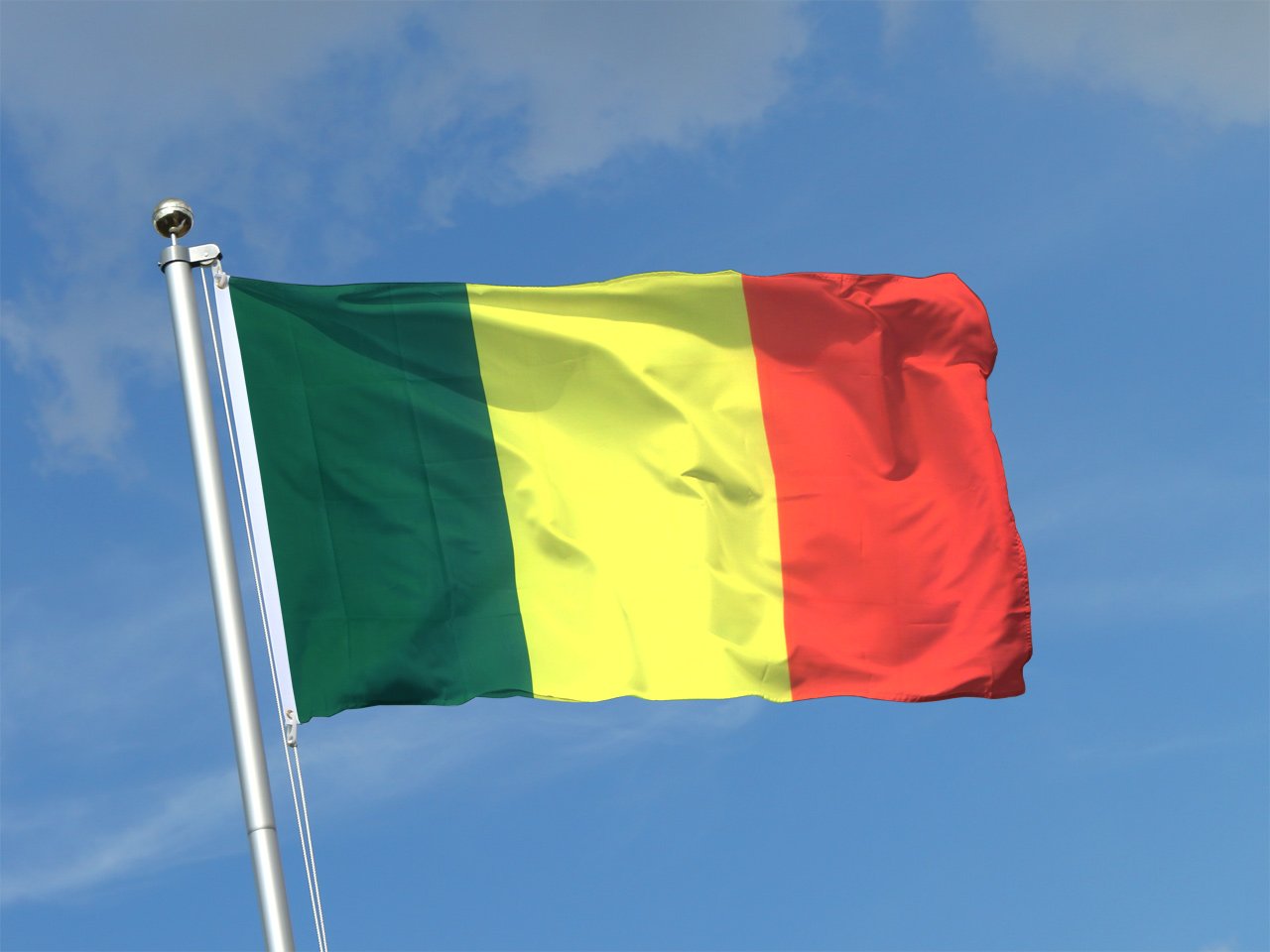
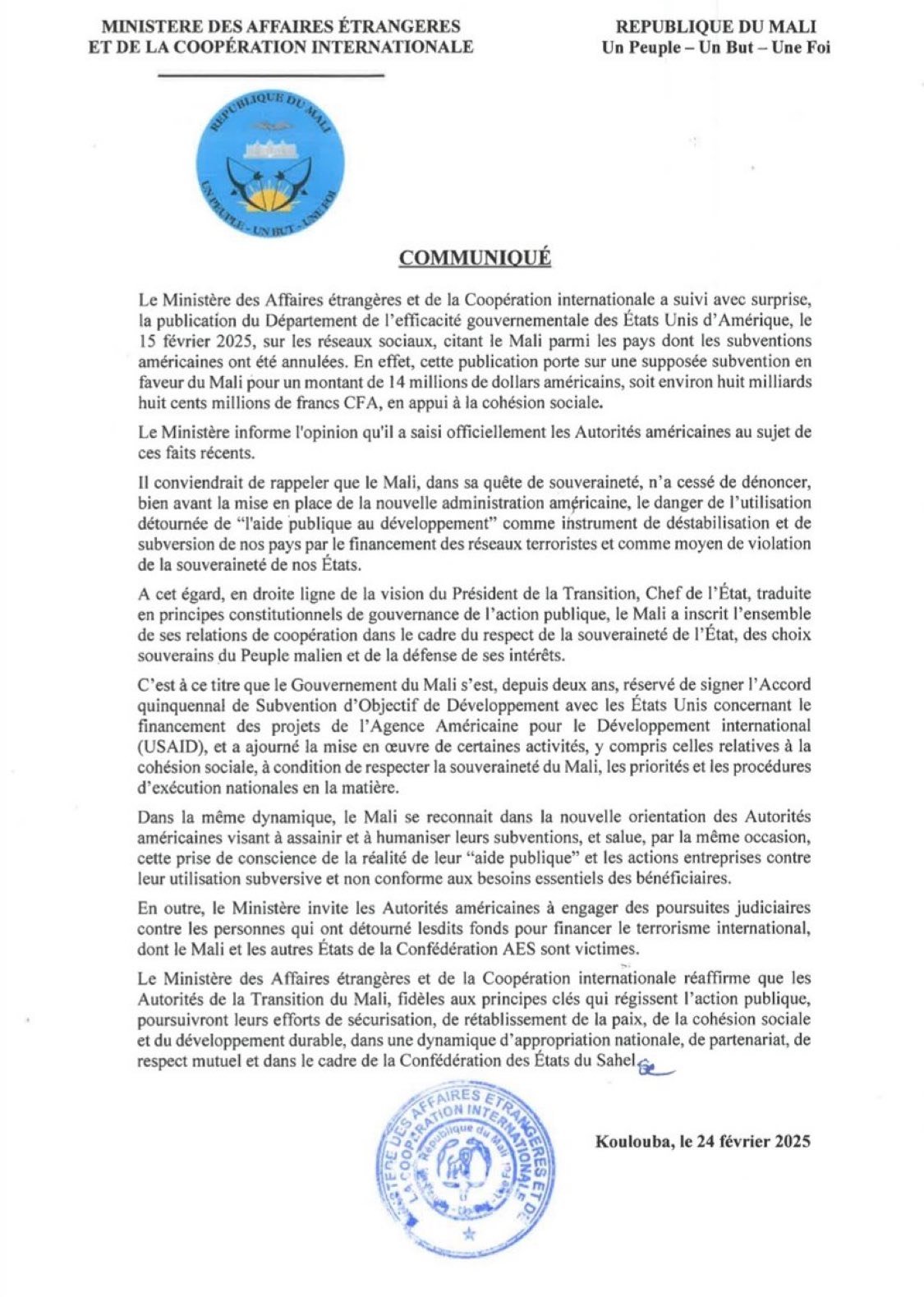
Mali has demanded that the United States prosecute officials accused of diverting millions of dollars in USAID funds to terrorist groups, including Boko Haram. The Malian government issued a strong statement on February 24, 2025, expressing shock over the recent cancellation of American aid to the country. Officials in Mali argue that these funds were not only misused but were deliberately channeled to fuel insurgencies that have destabilised the West African region. The disputed $14 million, originally meant for social development projects, has become the center of a controversy that highlights deeper concerns over the role of foreign aid in the Sahel.
The Malian Ministry of Foreign Affairs and International Cooperation did not hold back in its condemnation, stating that foreign aid has repeatedly been used as a tool of subversion rather than genuine development. The government insists that it had warned the United States about the risks of unchecked funding but was ignored. Now, as investigations in Washington reveal that American taxpayer money may have ended up in the hands of extremist groups, Mali is demanding more than just policy reforms. It is calling for criminal prosecutions of those responsible for what it describes as the financing of terrorism under the guise of humanitarian assistance.
This demand comes at a time when Mali has been actively distancing itself from Western influence and strengthening its security ties with Russia. Over the past few years, the country has expelled French troops and forged new military partnerships, asserting its sovereignty in the face of foreign interference. The latest statement reinforces this stance, making it clear that Mali will not tolerate external forces using financial aid to undermine its stability. The government argues that its regional allies within the Confederation of Sahel States, which includes Niger and Burkina Faso, have also suffered from the consequences of mismanaged international aid.
The controversy escalated when U.S. Congressman Scott Perry revealed alarming details about how foreign aid funds have allegedly been misdirected to terrorist organisations. Speaking at a congressional hearing on February 14, 2025, Perry accused USAID of inadvertently funding extremist groups, including Boko Haram, Al-Qaeda, and ISIS-affiliated factions. He described a system plagued by inefficiency and corruption, where American funds were being funneled into terrorist networks that directly threaten global security. Perry highlighted how these financial flows have supported terrorist training camps and ideological indoctrination centers across West Africa, raising serious concerns about the oversight of U.S. assistance programs.
His statement sent shockwaves through Washington, triggering calls for greater scrutiny over how American taxpayer money is allocated to foreign aid. The Malian government seized on these revelations to demand accountability, arguing that those responsible for enabling these illicit financial transactions must face justice. The government maintains that the people of Mali and the broader Sahel region have been the primary victims of this mismanagement, suffering from increased insecurity, economic disruption, and widespread displacement caused by extremist violence.
Mali’s call for action has put the United States in a difficult position as it struggles to address growing concerns over the effectiveness of its aid programs. While Washington has yet to officially respond to the demand for prosecutions, recent policy shifts indicate that U.S. authorities are taking the issue more seriously. Last month, the State Department announced a comprehensive review of its foreign aid programs, acknowledging the need to strengthen monitoring mechanisms and prevent funds from falling into the wrong hands. However, for many in Mali and other affected countries, these measures come too late. The damage has already been done, and there is growing frustration over what is perceived as years of negligence that have contributed to the region’s instability.
The U.S. Mission to Nigeria attempted to address these concerns by stating that comprehensive monitoring and evaluation systems are in place to track aid distribution. In a post on its verified X account, formerly known as Twitter, the mission reassured the public that U.S. assistance is carefully monitored to ensure it reaches the intended recipients. However, these assurances have done little to quell suspicions, particularly in light of the congressional hearing’s findings and Mali’s insistence that USAID funds have been used to fuel insurgencies rather than support development.
For many in the Sahel region, this issue extends beyond financial mismanagement and speaks to the broader struggle for sovereignty and self-determination. The revelation that foreign aid has allegedly been used to support the same extremist groups that governments in the region are fighting against has fueled growing distrust of Western intervention. Countries like Mali, Burkina Faso, and Niger have already taken steps to reorient their foreign policies, moving away from Western partnerships and embracing new alliances that they believe better serve their security interests.
As international pressure mounts, the coming weeks will be crucial in determining how the United States responds to these allegations. Will Washington take concrete steps to prosecute those responsible for diverting funds to terrorist organisations, or will the controversy be buried under bureaucratic delays? The Malian government has made it clear that it will not back down from its demand for justice. It is not just seeking accountability but also using this moment to reaffirm its position on the global stage as a nation that will not allow foreign powers to manipulate its security landscape.
The implications of this controversy extend far beyond Mali, as other countries in West Africa watch closely to see how the United States handles these allegations. If the claims are proven true and no action is taken, it could further erode trust in Western-backed aid programs and accelerate the shift toward alternative international partnerships. If Washington moves forward with prosecutions, it could mark a significant turning point in how foreign aid is managed, with stricter oversight and accountability measures put in place to prevent similar issues in the future.
Mali has set the stage for a diplomatic showdown, and the world is waiting to see how the United States will respond. For now, the Malian government has made its position clear. It will not accept vague promises of reform or empty reassurances. It wants to see concrete legal action taken against those who have used humanitarian aid to fund terrorism and destabilisation. The coming days will determine whether justice is served or whether this becomes yet another case of international aid controversies fading into obscurity.
Stay informed with the latest news from Nigeria and beyond. Join us on WhatsApp or Telegram for real-time updates. Have a report or article? Send it to report@trendingnaijanews.com. Follow us on X, Instagram, LinkedIn, YouTube, TikTok, and Facebook for more updates.