

A landmark counterterrorism victory and an energy crisis reshaping global markets are simultaneously dominating world conversations this Sunday.
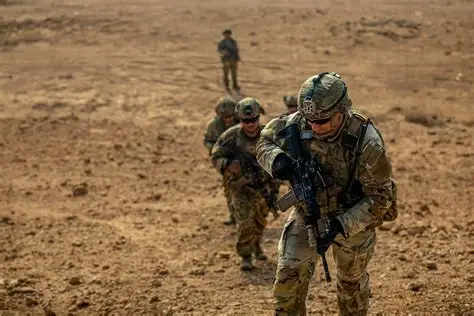
Two developments with enormous implications for Nigeria, Africa, and the wider world are dominating international headlines on Sunday, May 17, 2026. First, President Donald Trump announced that U.S. and Nigerian military forces jointly eliminated Abu-Bilal al-Minuki, described as the second-in-command of ISIS globally and ‘the most active terrorist in the world.’ The operation is the most significant counterterrorism success involving Nigeria in recent memory and signals the depth of the military intelligence partnership between Abuja and Washington. Former presidential candidate Gbenga Olawepo-Hashim described the killing as validation of long-standing warnings about ISIS’s expansionist designs in Northern Nigeria.
Second, the global oil market is in historic turmoil. The effective closure of the Strait of Hormuz since late February, triggered by the conflict involving the United States, Israel, and Iran, has driven Brent crude oil to over $117 per barrel, with daily prices reaching as high as $138 per barrel at the peak of the crisis. The U.S. Energy Information Administration estimates that 10.5 million barrels of daily production have been shut in across the Middle East, the equivalent of roughly 10 percent of all global oil supply vanishing from markets simultaneously.
For Nigerians, both stories carry immediate practical weight. The ISIS threat is not abstract: Abu-Bilal al-Minuki served as the primary operational connector between ISIS central command and its African affiliates, making his elimination directly relevant to security conditions in Nigeria’s northwest and northeast. Meanwhile, the global energy crisis and the extraordinary performance of the Dangote Refinery in shielding Nigeria from the worst fuel supply disruptions are unfolding as a validation of domestic energy sovereignty in real time.
The joint U.S.-Nigeria counterterrorism operation is being described by security analysts as a demonstration of what capable African partner forces, working alongside Western intelligence and military assets, can achieve. Nigeria’s partnership with the United States has deepened considerably in recent years, and the operation sets a template for the kind of bilateral cooperation that could be replicated across West Africa where jihadist groups continue to exploit governance vacuums.
In contrast, the Sahel countries of Mali, Burkina Faso, and Niger, which expelled French and Western forces in favor of Russian military proxies, have seen security conditions worsen rather than improve. The stark contrast between Nigeria’s counterterrorism results this week and the continued deterioration in Wagner-aligned Sahel states provides a powerful argument about the value and effectiveness of Western security partnerships.
On the energy front, the Dangote Refinery’s 650,000 barrels per day operational capacity has effectively made Nigeria a net exporter of petroleum products at precisely the moment when much of the world is scrambling for supply. Countries from Vietnam to Egypt and Bangladesh are implementing emergency fuel rationing measures. Nigerian motorists, though still facing elevated prices driven by global market forces, have avoided the catastrophic shortages and queue nightmares experienced elsewhere in the developing world.
President Tinubu, speaking at the Africa CEO Forum in Kigali this week, made the connection explicit: ‘Nigeria survived with over 200 million people in peace during this global energy crisis because we supported Dangote. If that refinery had not been established, we would not have survived.’ The statement reflects a growing consensus among policymakers that Africa’s economic resilience depends on industrial sovereignty, not just resource exports.
KEY HIGHLIGHTS
- U.S.-Nigeria joint forces killed ISIS global deputy Abu-Bilal al-Minuki in a major counterterrorism operation
- Global Brent crude oil is trading above $117 per barrel as the Strait of Hormuz remains effectively closed
- Dangote Refinery is shielding Nigeria from fuel shortages affecting dozens of other countries globally
- Nigeria’s security partnership with the U.S. offers a credible alternative to Russia-backed Sahel security models
- Tinubu confirmed $20 billion FDI attraction projection for Nigeria in 2026 at the Africa CEO Forum in Kigali