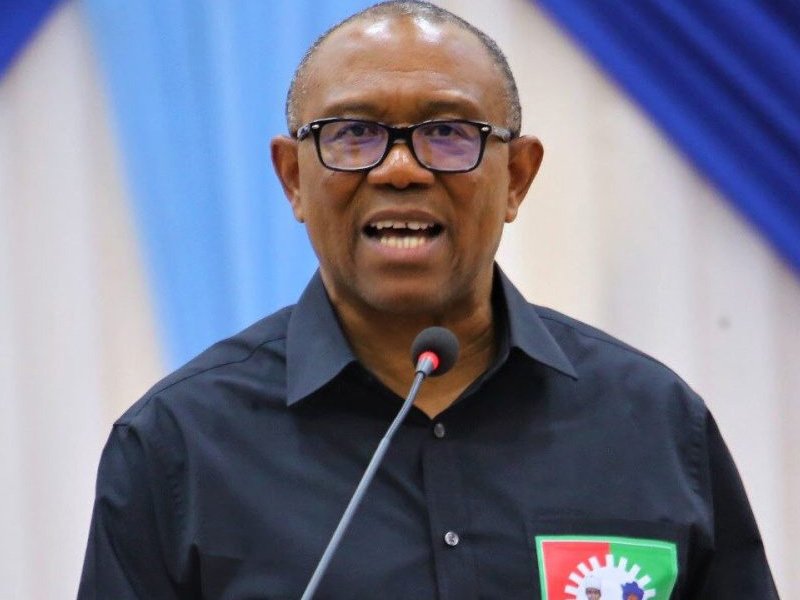
Nigeria’s political landscape shifted on its axis this week as Peter Obi, the former Labour Party standard-bearer who came strikingly close to the presidency in 2023, formally announced his defection to the Nigerian Democratic Congress (NDC). Citing what he described as the nation’s deteriorating condition and urgent need for rescue, Obi’s move signals the beginning of one of the most combustible pre-election seasons in Nigeria’s democratic history. With the 2027 general elections now less than 18 months away, every defection, every alliance, and every party congress is being watched with the intensity of a live broadcast.
Obi announced he was leaving the African Democratic Congress (ADC), stating that the dire condition of the nation and the urgent need to rescue Nigeria informed his decision. Almost immediately, chaos followed — the state congress of the NDC in Enugu was disrupted by suspected political thugs who invaded the venue and ordered delegates out of the hall. The optics were telling: a party that wants to present itself as the alternative to the ruling All Progressives Congress (APC) is already battling internal disorder before it has even properly opened for business.
The political drama doesn’t stop with Obi. The reinvigorated NDC has already reaped no fewer than 20 defectors, becoming the fourth force in the National Assembly. Meanwhile, the APC itself is preparing for consequential primaries, having pushed back its schedule — the ruling All Progressives Congress postponed its presidential primary to May 23, 2026, and governorship primary to May 21, 2026.
Read More: Nigeria’s Inflation Slows to 20.12%: Relief on Paper, Pressure in Markets
Inside the ruling establishment, President Tinubu continues to consolidate his base. A new deputy governor has been sworn in in Kano State — Alhaji Murtala Sule Garo — following the vacancy created by the departure of the previous deputy governor amid the governor’s defection to the All Progressives Congress. Every governorship seat, every Senate slot, every ward is being recalibrated for 2027. For Nigerians watching from Abuja, Lagos, Kano, and Aba, the central question is no longer whether there will be a serious challenge to Tinubu — it’s whether the opposition can unite long enough to mount one.
Analysts note that Obi’s move carries both opportunity and risk. His Obidient movement delivered unprecedented youth voter turnout in 2023, and that energy could translate to the NDC — if the party can stabilise. However, critics of the defection argue that changing platforms without changing the structural conditions of Nigerian politics is simply rearranging furniture in a burning house. Former Kano governor Rabiu Kwankwaso, who commands a strong northern base through the Kwankwasiyya movement, is also reportedly linked to the NDC coalition, raising the possibility of a formidable North-South opposition ticket.
What is certain is that Nigeria’s political temperature is rising — and it will only get hotter between now and 2027. The battle for Nigeria’s soul has begun in earnest.
Key Highlights:
- Peter Obi formally quits ADC, joins NDC ahead of 2027 elections
- NDC gains 20 new National Assembly defectors, becoming fourth legislative force
- APC postpones presidential primary to May 23, 2026
- New Kano deputy governor sworn in, signalling Tinubu’s state-level consolidation
- Obi-Kwankwaso alignment could reshape North-South opposition dynamics