

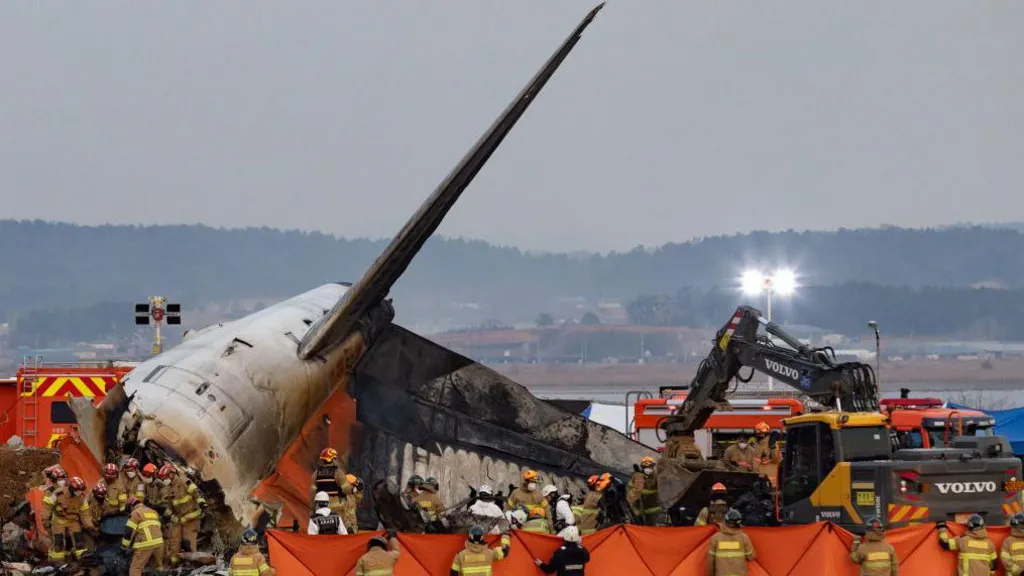
In an urgent and decisive response to a devastating air disaster, South Korea has announced plans to install cutting-edge bird detection cameras and thermal imaging radars at all its airports by 2026. This landmark decision follows the catastrophic crash that occurred in December 2024, which resulted in the tragic loss of 179 lives aboard a Jeju Air flight. The crash remains the deadliest aviation disaster on South Korean soil, and the new initiative is aimed at preventing further tragedies caused by bird strikes, a contributing factor to the crash.
The government’s commitment to enhancing air travel safety comes after investigators revealed that a bird strike played a pivotal role in the crash. The Boeing 737-800, which was flying from Bangkok to Muan International Airport, was found to have sustained damage from birds, with feathers and blood stains discovered on both engines of the plane. The investigation, though still ongoing, is focusing on the bird strike’s role in the crash, as well as a concrete structure located at the end of the runway, which the plane collided with after making an emergency landing.
The decision to roll out bird detection systems at all South Korean airports is aimed at reducing the risks posed by birds to aircraft, particularly during takeoffs and landings. The new technology will enhance early detection of birds, including those that are farther from the airport, providing air traffic controllers with real-time information on bird movements. This early warning system is expected to improve the ability of flight crews and ground controllers to respond to potential bird strikes swiftly and effectively, minimizing the chance of accidents.
The Ministry of Land in South Korea, which is overseeing the implementation of this technology, confirmed that all airports will be equipped with both bird detection radars and at least one thermal imaging camera. The thermal imaging cameras, which are already installed in only four airports, will play a crucial role in detecting birds during low-visibility conditions, particularly at night. The thermal radars can identify the size and movement of birds, transmitting this vital information to air traffic controllers who can then adjust flight operations as needed to avoid a strike.
Moreover, the government is taking steps to address environmental factors that contribute to bird strikes. In addition to the installation of bird detection technology, airports will be required to relocate areas that attract birds, such as rubbish dumps, away from the vicinity of runways. This is part of a broader strategy to create safer flight conditions by minimizing the likelihood of birds being in the path of aircraft.
The December crash, which occurred on December 29, 2024, was a direct result of a series of unfortunate circumstances. After taking off from Bangkok, the flight encountered a bird strike shortly before reaching its destination. The control tower had warned the flight crew about bird activity near Muan International Airport, but just minutes later, the pilot reported that the aircraft had collided with a bird and issued a mayday signal. In a desperate attempt to save the plane and its passengers, the pilot requested permission to land from the opposite direction, but the landing was perilous. The aircraft belly-landed without its landing gear deployed, and tragically, the plane overran the runway, crashing into a concrete structure. The plane exploded shortly after, leaving only two cabin crew members as survivors.
The black box data from the flight revealed that the flight data and cockpit voice recorders had stopped transmitting just minutes before the crash. Despite this, investigators are working tirelessly to piece together the final moments of the flight. The lives lost in this disaster ranged in age from just three to 78 years old, and the grief experienced by the families of the passengers is immeasurable. The crash underscored the vital importance of proactive safety measures to protect lives and prevent similar incidents in the future.
Following the disaster, South Korea’s aviation authorities also began reviewing the safety of all its airports. A comprehensive review led to the decision to adapt the runway safety areas at seven of the nation’s airports. Experts have stated that the number of fatalities in the December crash could have been significantly lower if not for the concrete structure that the plane struck after its emergency landing. These safety upgrades are being implemented as part of the country’s ongoing efforts to safeguard aviation operations.
As the nation grapples with the aftermath of this tragic event, the decision to introduce bird detection technology is a significant step toward improving aviation safety in South Korea and beyond. The use of bird detection radars and thermal imaging cameras is an innovative solution that will greatly enhance the ability of airports to identify potential threats and respond quickly to avoid accidents. South Korea’s proactive stance on air safety is an example of how technology and policy can work together to mitigate risks and ensure the safety of passengers and crew.
The rollout of these technologies is also likely to have a global impact, with other countries potentially following South Korea’s lead in implementing similar systems to prevent bird strikes. As the aviation industry continues to evolve, the importance of integrating technology to improve safety standards is becoming increasingly clear. South Korea’s decision to equip all airports with bird detection and thermal imaging technology marks a critical turning point in the country’s aviation safety landscape.
Stay informed with the latest news from Nigeria and beyond! Join us on WhatsApp or Telegram for real-time updates. Have a report or article? Send it to report@trendingnaijanews.com. Follow us on X (Twitter), Instagram, LinkedIn, YouTube, TikTok, and Facebook for more updates.