

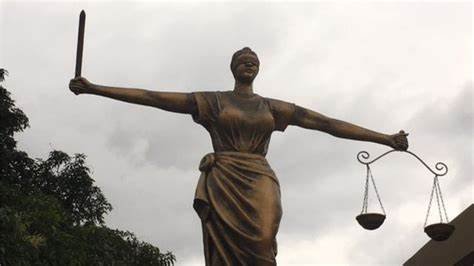
A nation’s justice system is the pillar upon which its democracy, human rights, and rule of law stand. When that system fails, it does not just betray an individual but undermines the entire foundation of society. This is the grim reality facing Nigeria today as the Supreme Court, the highest judicial authority in the land, has chosen to condemn Sunday Jackson, a man who by all reasonable accounts acted in self-defense. His case is not just about one man on death row; it is a chilling reminder of the flaws, biases, and inconsistencies within Nigeria’s legal framework.
Sunday Jackson, a simple farmer, was not a man with a criminal record. He was not a man with a history of violence. He was not a man seeking conflict. He was simply tending to his farmland when, by an unfortunate twist of fate, he found himself under attack. Faced with imminent danger, he defended himself, as any human being with a will to survive would. The law in most civilized nations recognizes self-defense as a fundamental right, yet the Nigerian courts have chosen to disregard this basic principle. Instead of acknowledging the circumstances surrounding the incident, the system swiftly convicted Jackson of premeditated murder; a charge that requires irrefutable proof that he had intended to kill. Such proof was absent, yet the legal machinery moved against him with ruthless efficiency, sealing his fate in what can only be described as a gross miscarriage of justice.
For ten years, Sunday Jackson has languished in the shadows of death row, a man abandoned not only by his family but by the very system that should have protected him. His wife left him, his hopes for freedom dwindled, and with every passing day, the walls of his cell became the only reality he knew. His story might have faded into the abyss of forgotten cases had it not been for the relentless advocacy of human rights activists like Dr. William Delvin, a US-based advocate, and Barrister Emmanuel, a Nigerian legal expert. These men, who have spent years fighting for justice in Nigeria, were left in disbelief as they watched the Supreme Court deliver its ruling. The hearing lasted a mere two minutes; an unthinkably short duration for a case involving a man’s life. No deep deliberations, no thorough review of evidence, no consideration of the weighty international attention the case had garnered. Just two minutes to affirm a decision that will send a man to the gallows.
Dr. Delvin, speaking with raw emotion, revealed the heartbreak of that moment. “We wept at the failure of the Nigerian Supreme Court,” he said. His words capture the essence of what so many feel, not just sorrow for Sunday Jackson but disillusionment with a system that has allowed such an injustice to occur. What does it say about a country’s legal system when even those advocating for justice are left in tears at its failure? What does it say about Nigeria’s respect for human rights when a man can be sentenced to death without a fair and proper legal review? The answers to these questions paint a troubling picture, one that places Nigeria’s justice system under global scrutiny.
The international implications of this case cannot be ignored. Human rights organizations have long raised concerns over Nigeria’s judicial process, and Jackson’s case adds to the growing dossier of questionable convictions. Open Doors, a global human rights organization, has documented cases of Christian farmers facing increasing violence, particularly from Fulani militant groups. The fact that Jackson, a Christian farmer, now faces execution while his right to self-defense is dismissed raises deeper concerns about whether justice in Nigeria is truly impartial. Is this simply a legal oversight, or does it reflect a broader pattern of systemic bias? The world is watching closely, and the pressure is mounting for Nigeria to prove that it upholds the principles of justice and fairness.
Clemency is now the only path left to save Sunday Jackson’s life. His fate rests in the hands of the Nigerian government, which has the power to intervene before this tragedy becomes irreversible. Granting clemency would not be an act of mercy; it would be an act of justice. It would be an acknowledgment that the system failed him, that a man’s life should not be taken away based on a flawed judgment, and that self-defense is a right that must be recognized and protected. The Nigerian government now faces a defining moment. It can either choose to uphold an unjust conviction, thereby reinforcing global perceptions of a broken legal system, or it can take a stand for justice and prove that Nigeria values the lives of its citizens.
If this execution proceeds, the consequences will extend far beyond Sunday Jackson. It will send a dangerous message that in Nigeria, innocence is not enough to save a person from the noose. It will solidify the perception that justice is a privilege afforded only to those with power and influence, while the vulnerable are left to suffer. It will raise doubts about whether the courts operate with integrity or whether they merely function as instruments of bureaucracy, unwilling to correct their own mistakes. The outcry will not be limited to Nigeria; it will reverberate across international human rights circles, diplomatic corridors, and legal institutions that advocate for fairness and due process.
The responsibility now lies with the Nigerian authorities to act before it is too late. The people of Nigeria must demand justice, the international community must amplify its calls for clemency, and those in power must recognize that the world is watching. Sunday Jackson should not die for defending himself. His case should serve as a turning point, a moment of reckoning for a justice system in desperate need of reform. A nation’s greatness is not measured by its wealth or power but by its commitment to justice. Nigeria now has a chance to demonstrate that commitment.
Will the government choose justice over indifference? Will it correct the errors of the courts before an irreversible tragedy occurs? Or will it allow an innocent man to die, forever marking this moment as a dark chapter in Nigeria’s legal history? The answer to these questions will define Nigeria’s reputation in the eyes of the world. The time to act is now. Justice must not be delayed any longer.
Stay informed with the latest news from Nigeria and beyond! Join us on WhatsApp or Telegram for real-time updates. Have a report or article? Send it to report@trendingnaijanews.com. Follow us on X (Twitter), Instagram, LinkedIn, YouTube, TikTok, and Facebook for more updates.