

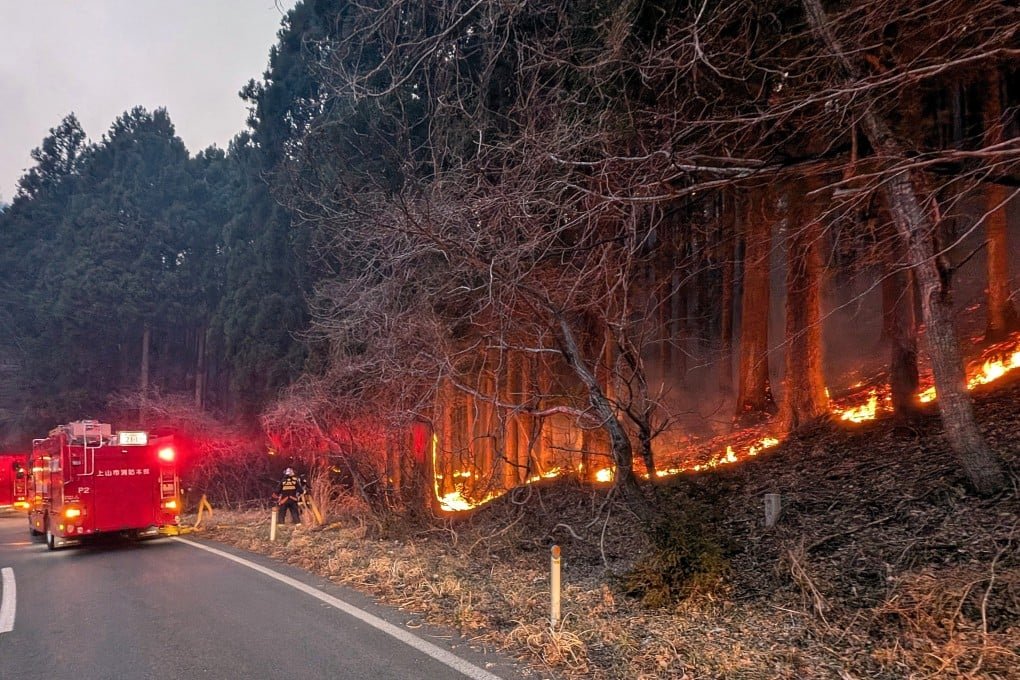
More than 2,000 firefighters are battling Japan’s most devastating forest fire in three decades as the blaze continues to tear through Iwate Prefecture, forcing thousands to flee their homes.
The fire, which began on Thursday near the city of Ofunato in northern Japan, has already consumed over 5,200 acres of forest. At least one person has died, while more than 80 buildings have been reduced to ashes or severely damaged, according to the Fire and Disaster Management Agency (FDMA). Officials warn that the true extent of the destruction is still being assessed as the inferno rages on.
Evacuation orders remain in effect for approximately 4,600 residents. Of those displaced, 1,200 have sought refuge in makeshift shelters while another 2,000 have taken shelter with relatives or friends. Emergency teams are working around the clock to prevent further casualties as the flames threaten to engulf residential areas.
Prime Minister Shigeru Ishiba, addressing the escalating crisis in parliament, assured the nation that every effort is being made to protect human lives and properties. “Although it is inevitable that the fire will spread to some extent, we will take all possible measures to ensure there will be no impact on people’s homes,” Ishiba declared.
However, the situation remains critical. Ofunato, known for its dry winter season, is facing one of the most severe droughts on record. The region recorded just 2.5 millimeters of rain last month—far below the 41-millimeter average—creating perfect conditions for wildfires to spread rapidly.
A fleet of 16 helicopters is assisting ground crews, with dramatic aerial footage showing water being dropped over the blackened landscape as thick smoke billows into the sky. Firefighting teams from 14 prefectures, including Tokyo, have been deployed in a desperate attempt to contain the blaze before it reaches more densely populated areas.
The fire is the latest environmental disaster to strike Japan, which experienced its hottest year on record in 2024. Climate experts warn that rising global temperatures are fueling a surge in extreme weather events, including heatwaves and wildfires, posing a growing threat to communities across the country.
Local authorities are urging residents to remain vigilant as strong winds continue to fan the flames. Emergency workers are going door-to-door in affected areas to assist elderly and vulnerable residents who may be unable to evacuate on their own.
Meanwhile, firefighters are racing against time to create firebreaks and prevent the blaze from spreading to nearby towns. Despite their efforts, the unpredictable wind patterns have made it difficult to gain full control, raising fears that the fire could burn for several more days.
Residents who have lost their homes are grappling with uncertainty. Many expressed frustration over the slow pace of relief efforts, while others remain in shock as they sift through the charred remains of their belongings.
As the flames continue to burn, pressure is mounting on the government to strengthen Japan’s disaster preparedness and improve its response to climate-driven emergencies.
For now, the battle against the largest forest fire in decades rages on, with thousands of lives hanging in the balance.