

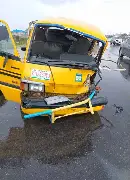
A tragic accident occurred on the Lagos-Badagry Expressway early Monday, resulting in multiple fatalities and severe injuries. The incident involved a commercial bus and a private vehicle, both of which were traveling at high speed when the collision happened.
Eyewitnesses say the crash occurred near the Alakija axis, a location notorious for reckless driving and poor road conditions. Emergency responders arrived at the scene within minutes, but several lives had already been lost.
The tragedy has once again raised serious questions about the state of Nigerian highways and the enforcement of road safety laws in Lagos State.
How the Lagos-Badagry Collision Happened
The accident reportedly took place around 6:45 a.m., during rush hour. According to officials from the Lagos State Traffic Management Authority (LASTMA), a private vehicle attempted a dangerous lane change and collided head-on with a fully loaded commercial bus.
The impact caused both vehicles to veer off the road, flipping the bus and trapping several passengers underneath. At least six people were confirmed dead on the spot, while others sustained varying degrees of injury.
Fire and rescue teams, including FRSC and LASEMA, evacuated the scene and moved the injured to nearby hospitals for treatment.
Road Safety Concerns on Lagos-Badagry Expressway
The Lagos-Badagry Expressway has long been associated with fatal accidents due to a mix of high-speed traffic, bad road patches, and lack of signage. Despite being a key trade corridor connecting Nigeria to Benin Republic, the road remains largely neglected in some sections.
Speeding, poor lighting, and illegal bus stops have contributed to multiple deadly crashes. Although reconstruction efforts are ongoing, commuters say enforcement of speed limits and traffic discipline is still weak.
Local drivers are urging the Lagos State Government to install more traffic cameras and speed breakers on high-risk lanes.
Government and Public Response
In a statement released Monday afternoon, the Lagos State Ministry of Transportation promised to fast-track the road’s rehabilitation and improve traffic control measures.
The FRSC also warned motorists to avoid reckless overtaking and obey all road safety guidelines. “We cannot continue to lose innocent lives to preventable accidents,” said Sector Commander Babatunde Farinloye.
On social media, Nigerians expressed frustration over recurring tragedies on major Lagos roads. Many demanded that road infrastructure improvements be matched with stricter enforcement.
Why the Lagos-Badagry Road Remains a Danger Zone
Despite ongoing upgrades, the Lagos-Badagry route remains one of the most dangerous expressways in Nigeria. Multiple bottlenecks, outdated road markings, and erratic driver behavior increase the risk of fatal crashes daily.
In addition, traders and commercial vehicles often block traffic lanes, creating chaotic conditions for both motorists and pedestrians.
Experts suggest a combination of driver education, smart traffic enforcement tools, and urban planning improvements to make the road safer for everyone.
Ultimately, the tragic accident on the Lagos-Badagry Expressway highlights the urgent need for comprehensive road safety reforms. As families mourn lost lives, the government must prioritize infrastructure development and traffic law enforcement.
To prevent further tragedies, drivers must be held accountable, and dangerous roads must be redesigned with safety in mind. Nigeria cannot afford to treat road fatalities as routine news.