

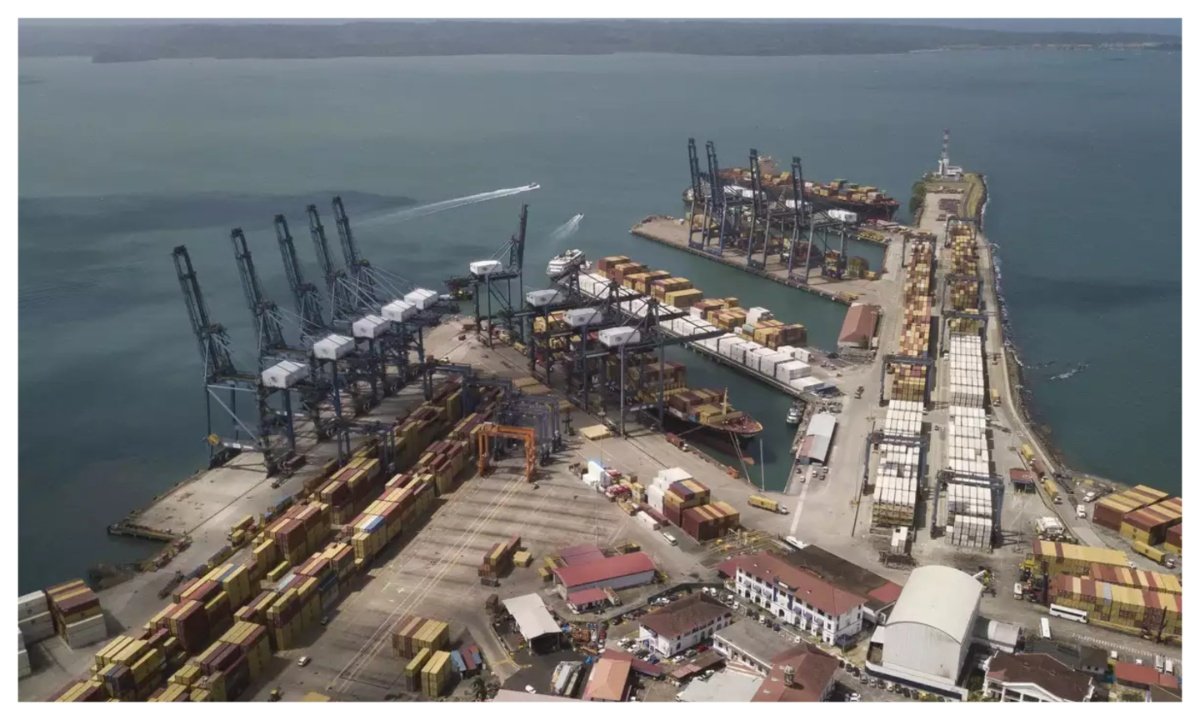
In a significant diplomatic development, the United States Department of State announced on Wednesday that American government vessels will no longer be required to pay the fees traditionally levied on vessels transiting through the Panama Canal. This decision follows a diplomatic breakthrough after U.S. Secretary of State Marco Rubio met with Panama’s President, Jose Raul Mulino, during a recent trip to Central America. The agreement between the two nations is expected to have far-reaching implications for both countries, saving the U.S. government millions of dollars each year and potentially improving bilateral relations.
The official announcement was made via a tweet from the U.S. Department of State’s X account, which read, “The government of Panama has agreed to no longer charge fees for U.S. government vessels to transit the Panama Canal.” This change is being hailed as a major win for the U.S. government, which had expressed concerns over the financial burden these fees imposed on the American taxpayer, particularly given the vital role the Panama Canal plays in global shipping and U.S. military operations.
The decision marks a shift in the longstanding relationship between the United States and Panama. In January, U.S. President Donald Trump criticized Panama for charging what he called excessive rates for using the canal, a crucial maritime route that connects the Atlantic and Pacific Oceans. Trump’s administration had raised concerns that the fees were disproportionately high for U.S. government vessels, calling into question the fairness and financial viability of these charges.
Trump had even issued a stern warning in January, saying, “If the principles, both moral and legal, of this magnanimous gesture of giving are not followed, then we will demand that the Panama Canal be returned to us, in full, and without question.” While the comment sparked debate, the U.S. government’s latest move indicates a willingness to engage Panama diplomatically in resolving these issues.
The financial implications of this agreement are significant. The Panama Canal is one of the busiest and most strategically important shipping routes in the world. U.S. government vessels, including those used for military and humanitarian missions, frequently pass through the canal as part of their operational requirements. By removing the fees associated with these transits, the U.S. government will save millions of dollars annually, funds which can be redirected to other priorities.
In addition to the savings for the U.S. government, this agreement could foster closer cooperation between the two countries in other areas, particularly in terms of trade and regional security. The decision is likely to be viewed favorably by U.S. military officials, who rely on the Panama Canal for the rapid movement of naval and support vessels.
While the decision is seen as a victory for the United States, it could also have benefits for Panama. The canal, a symbol of Panama’s national pride, generates substantial revenue from transit fees, but it also serves as a critical economic asset for the entire region. By accommodating the U.S. request, Panama has strengthened its relationship with its most important ally in the Americas. Furthermore, the deal signals a level of diplomatic cooperation that may lead to future opportunities for economic and political collaboration.
The decision to exempt U.S. government vessels from paying fees to transit the Panama Canal reflects the evolving dynamics of international relations in the Western Hemisphere. The agreement highlights the Trump administration’s approach to reasserting American interests in global trade and military operations while also seeking to balance relationships with critical partners like Panama. It remains to be seen whether this move will set a precedent for future agreements involving the Panama Canal or if other nations will follow suit in seeking similar exemptions.
The U.S.-Panama agreement comes at a time of increasing geopolitical tension in the region, with the canal’s control and its economic significance likely to continue to be a point of negotiation. This diplomatic resolution represents an important moment in shaping the future of U.S.-Panama relations, with the potential for positive outcomes for both nations in the years ahead.
Stay informed with the latest news from Nigeria and beyond! Join us on WhatsApp or Telegram for real-time updates. Have a report or article? Send it to report@trendingnaijanews.com
Follow us on X (Twitter), Instagram, LinkedIn, YouTube, Tiktok, and Facebook for more updates!