

The year 2024 is set to be remembered as a period of turmoil for Nigeria’s major opposition party, the Peoples Democratic Party (PDP), marked by internal squabbles that overshadowed its efforts to provide credible opposition to the ruling government. The party, grappling with power struggles at both the national and state levels, found itself embroiled in conflicts that weakened its standing.
The year began with agitation from party leaders for a meeting of the National Executive Committee (NEC), as the PDP National Working Committee (NWC) had failed to convene a meeting in 2023 to address the vacancy left by former National Chairman Iyorchia Ayu after the 2023 general election. Despite the mounting tensions, the battle for control of the party machinery continued throughout the year.
A key issue that shaped the PDP’s internal struggles was the fallout from the 2023 presidential primaries, where former Vice President Atiku Abubakar clinched the presidential ticket over former Rivers State Governor Nyesom Wike. Wike, alongside other aggrieved governors, formed the G-5 group, protesting the party’s failure to replace Ayu with a southern candidate as National Chairman. Their departure from the party’s presidential campaign team marked the beginning of ongoing internal conflicts that plagued the PDP in 2024.
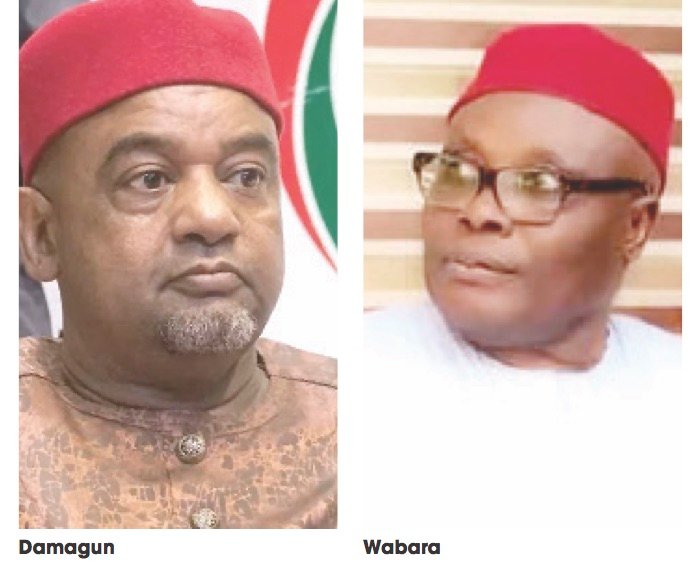
The intra-party crisis extended to the battle for leadership roles within the party. After Ayu’s removal, acting National Chairman Umar Damagum struggled to maintain control, with his supporters and those loyal to Atiku clashing over the succession process. Meanwhile, tensions over the National Secretary position, particularly between leaders of the South East PDP, further deepened divisions.
At the local level, PDP’s conflicts extended to Edo and Rivers states. In Edo, the party was divided between former Governor Godwin Obaseki and National Vice Chairman (South South) Dan Orbih, with infighting over the nomination of candidates for the Edo governorship election. The dispute led to defections to the All Progressives Congress (APC) and the eventual loss of the governorship to the APC.
Rivers State also witnessed a rift between Governor Siminalayi Fubara and his predecessor Wike, leading to a boycott of the local government election. This left the PDP without control of local governments in the oil-rich state.
Despite efforts to resolve the internal conflicts, including the establishment of a reconciliation committee, the PDP’s crises persisted. As the year ended, the party was faced with the challenge of holding primary elections in Ekiti and Osun states ahead of the 2026 governorship elections.
Looking forward to 2025, the PDP faces a critical crossroads. The party must reconcile its internal differences, rebuild its leadership structure, and focus on regaining electoral ground. Without unity and a clear direction, its chances of regaining power in key elections remain uncertain.