

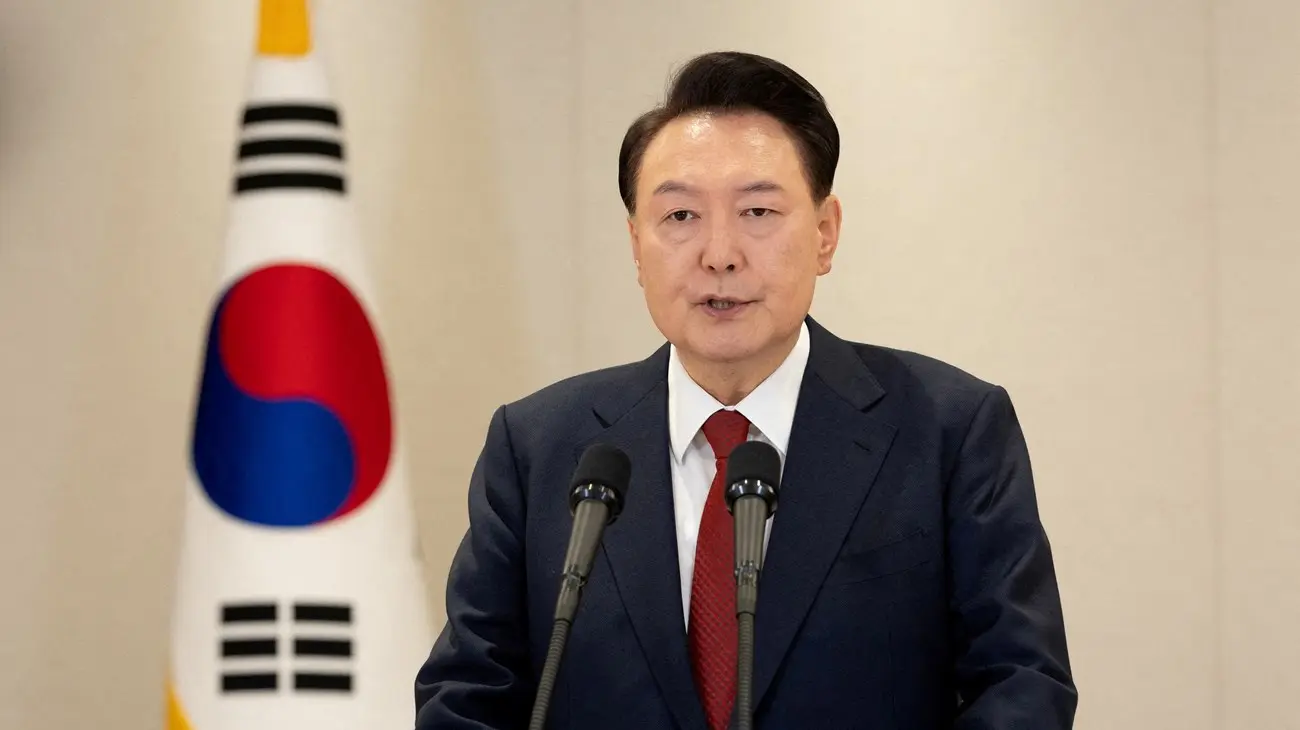
A South Korean court has issued an arrest warrant for President Yoon Suk Yeol, marking a dramatic turn in the political crisis surrounding his controversial imposition of martial law earlier this month. The court’s decision comes after the President failed to appear for questioning, as requested by investigators probing his actions.
The Corruption Investigation Office for High-Ranking Officials (CIO) requested the arrest warrant after President Yoon’s alleged role in the December 3 imposition of martial law, which has sparked widespread protests and political unrest. A Seoul court approved the warrant requested by the Joint Investigation Headquarters, which has been examining the legality of Yoon’s actions.
In a statement released this morning, the Joint Investigation Headquarters confirmed that both an arrest and search warrant were issued for the President, adding to the already intense scrutiny surrounding his administration.
However, President Yoon’s legal team has strongly condemned the move. Yoon Kab-keun, the President’s lawyer, labeled the arrest and search warrants “illegal and invalid,” arguing that they were issued by an agency with no investigative authority. “The arrest warrant and search and seizure warrant issued at the request of an agency without investigative authority are illegal and invalid,” Yoon Kab-keun asserted.
The arrest warrant stems from allegations of abuse of power and accusations that President Yoon orchestrated a rebellion during the imposition of martial law. These charges have become a focal point of national debate, with opposition groups calling for Yoon’s removal from office.
This development is historic, as it is the first time in South Korean history that an arrest warrant has been issued for an incumbent president. Local media has been abuzz with reports of the unprecedented move, reflecting the gravity of the situation.
As the investigation continues, the political crisis surrounding Yoon’s leadership is expected to escalate. With his legal team fiercely defending his actions, it remains to be seen how the situation will unfold in the coming days. The arrest warrant has added another layer of uncertainty to South Korea’s already volatile political landscape.