

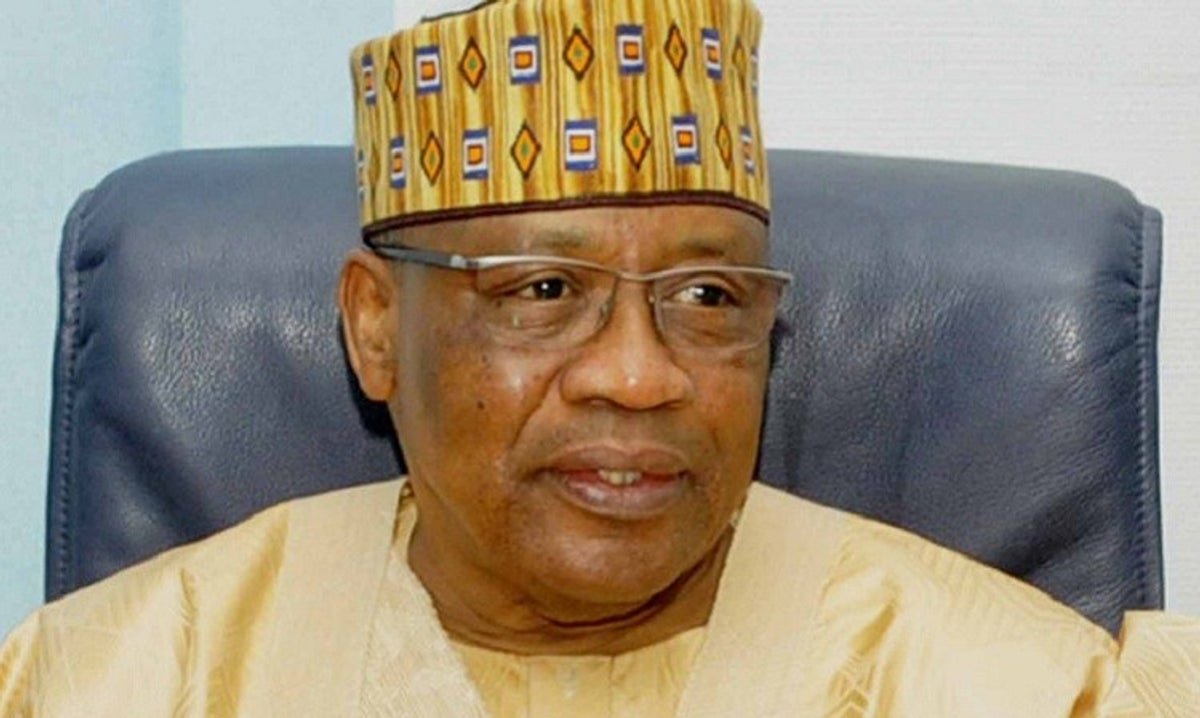
Nigeria’s political and military history has been defined by a series of transitions, power struggles, and conflicts that have shaped the nation’s present and future. One of the most pivotal and controversial moments in Nigeria’s history was the emergence of Yakubu Gowon as Head of State following the assassination of Major General Johnson Aguyi-Ironsi in 1966. Former military Head of State, Ibrahim Badamasi Babangida, has revealed that this transition was not only contested but also triggered a rift between Gowon and the late Biafran leader, Emeka Odumegwu Ojukwu, leading to intense national tensions and setting the stage for a series of events that would eventually culminate in the Nigerian Civil War.
Babangida, in his memoir A Journey in Service, provides an inside account of the events that followed Aguyi-Ironsi’s death and how it led to deep divisions within the Nigerian military and political leadership. He explains that Ojukwu outrightly rejected Gowon’s emergence as Head of State, insisting that Brigadier Babafemi Ogundipe, who was the most senior military officer at the time, should have taken over. Ojukwu, who was then the military governor of the Eastern Region, argued that established military protocol dictated that seniority should be respected in the appointment of a new leader. However, in the complex and ethnically charged political environment of 1966, the reality was far more complicated. Gowon, a northerner, was seen as a more politically favorable choice by key power brokers in the Nigerian military, leading to widespread controversy and resistance from the Eastern Region under Ojukwu’s leadership.
The rejection of Gowon’s leadership by Ojukwu created a sharp divide within the country. Ojukwu made his stance clear through an early morning broadcast from Enugu, stating unequivocally that he did not recognize Gowon’s authority. His defiance was not just about military hierarchy but was deeply rooted in the broader political and ethnic tensions that had been brewing in Nigeria since independence. The Eastern Region, where Ojukwu held power, had already been feeling marginalized, and the killing of Aguyi-Ironsi, who was from the Igbo ethnic group, further fueled suspicions that the coup was orchestrated against the Igbo leadership.
As the situation escalated, Gowon attempted to ease tensions by calling for a national conference where regional political leaders, dubbed the “Leaders of Thought,” were invited to discuss the country’s future. Despite these efforts, the deep-rooted divisions within the military and political structures continued to widen. The power struggle had begun to affect even lower-ranking officers, including Babangida himself, who was transferred from Kaduna to Abeokuta in early August 1966 as part of the military restructuring that followed the crisis.
The ongoing tension between Gowon and Ojukwu became one of the defining factors that led to the outbreak of the Nigerian Civil War. With diplomatic efforts failing and trust between the federal government and the Eastern Region completely eroded, Ojukwu declared the Republic of Biafra in 1967, plunging the country into one of the most devastating conflicts in African history. The war lasted for over two years, causing immense destruction, human suffering, and the loss of millions of lives.
Babangida’s account offers a fresh perspective on the political and military dynamics that unfolded in the aftermath of Aguyi-Ironsi’s assassination. His revelations highlight how a single decision—Gowon’s appointment as Head of State—became the catalyst for a deeper national crisis, one that exposed the fragility of Nigeria’s unity and set the country on a path of war. The struggle between military hierarchy, ethnic interests, and political maneuvering ultimately shaped the course of Nigeria’s history, with consequences that continue to be felt today.
Stay informed with the latest news from Nigeria and beyond! Join us on WhatsApp or Telegram for real-time updates. Have a report or article? Send it to report@trendingnaijanews.com. Follow us on X (Twitter), Instagram, LinkedIn, YouTube, TikTok, and Facebook for more updates!