

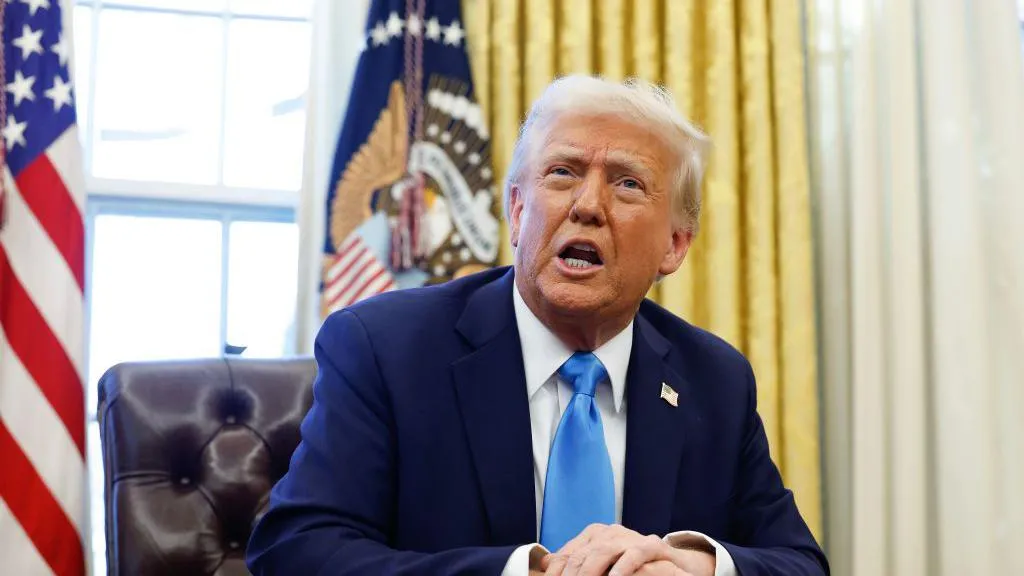
A powerful wave of international opposition has emerged against the recent sanctions imposed by former U.S. President Donald Trump on the International Criminal Court (ICC). Leaders from around the world have condemned the move, calling it a direct attack on global justice and accountability. A total of 79 countries, including the United Kingdom, Germany, and France, have signed a joint statement expressing unwavering support for the ICC, describing it as “a vital pillar of the international justice system.” This coordinated response underscores the deepening divide between the United States and the global community over international law and human rights enforcement.
The sanctions, which include financial and visa restrictions on ICC officials, were announced shortly after Trump met with Israeli Prime Minister Benjamin Netanyahu. The timing of this decision has fueled speculation that it was designed to shield Israel from accountability over alleged war crimes in Gaza. The ICC had issued an arrest warrant for Netanyahu, citing credible evidence of human rights violations committed by Israeli forces. The court had also targeted a Hamas commander, arguing that both sides in the ongoing conflict bear responsibility for war crimes. However, the U.S. government has strongly rejected this equivalency, condemning the ICC’s actions as politically motivated and detrimental to American and Israeli interests.
The United States and Israel have long opposed the ICC, refusing to recognize its authority. American officials argue that the court lacks jurisdiction over their citizens and that its actions threaten national sovereignty. Trump’s executive order claims that the ICC’s investigations pose a direct challenge to U.S. foreign policy and military operations. By imposing sanctions, the former president has escalated a long-running dispute, drawing sharp criticism from international legal experts who warn that such measures set a dangerous precedent.
The global backlash against Trump’s decision has been swift and decisive. European Commission President Ursula von der Leyen condemned the sanctions, asserting that the ICC “must be able to freely pursue the fight against global impunity.” The United Nations has called for an immediate reversal of the decision, emphasizing that it undermines decades of progress in international law. Human rights organizations have also spoken out, warning that the sanctions could embolden war criminals and weaken mechanisms designed to hold them accountable.
Despite this strong opposition, not all Western nations have taken a stance. Countries like Australia, Hungary, the Czech Republic, and Italy have notably refrained from signing the joint statement, raising questions about their position on global justice. Meanwhile, Israel has welcomed Trump’s actions. Israeli Foreign Minister Gideon Saar praised the executive order, arguing that the ICC’s investigations are baseless and politically driven. He accused the court of unfairly targeting Israel while ignoring crimes committed by hostile nations and terrorist organizations.
The ICC has remained defiant in the face of mounting pressure. In a statement, the court reaffirmed its commitment to justice, vowing to continue prosecuting war crimes and crimes against humanity. ICC officials have urged member states and civil society organizations to stand united against efforts to weaken the institution, emphasizing that justice must not be compromised by political considerations.
This latest controversy is part of a broader pattern of U.S. resistance to the ICC. During Trump’s first term, his administration imposed similar sanctions on ICC officials investigating allegations of American war crimes in Afghanistan. Those sanctions were later lifted by President Joe Biden, signaling a temporary shift in U.S. policy. However, the Biden administration has also criticized the ICC in recent months, particularly regarding its warrant for Netanyahu. Biden himself denounced the court’s decision, calling it “outrageous” and arguing that Israel should not be equated with Hamas.
The ICC’s work has increasingly put it at odds with powerful nations. In addition to pursuing cases against Israeli and Hamas leaders, the court has issued an arrest warrant for Russian President Vladimir Putin over alleged war crimes in Ukraine. It has also targeted Taliban leaders for their persecution of Afghan women and investigated Myanmar’s military for atrocities committed against the Rohingya Muslim population. These actions have solidified the ICC’s role as a key player in global justice, but they have also made it a target for political retaliation.
As tensions escalate, many observers are questioning the future of the ICC and the broader international justice system. While Trump’s sanctions have sparked outrage, they have also highlighted the challenges the court faces in enforcing its rulings against powerful states. The creation of “The Hague Group” by nine countries, including South Africa and Malaysia, is a direct response to these challenges. This coalition aims to defend the ICC’s independence and protect its rulings from political interference.
The timing of Trump’s decision has further complicated matters. His executive order coincides with a controversial proposal to “take over” Gaza and transform it into a luxury tourism destination. Trump has argued that relocating Palestinian residents and redeveloping the area could turn it into “the Riviera of the Middle East.” This idea has been widely rejected by Arab leaders and international organizations, who view it as an attempt to erase Palestinian identity and sovereignty. Despite widespread condemnation, Trump has doubled down on the proposal, reiterating his vision on his Truth Social platform.
The battle over the ICC is far from over. As global leaders continue to voice their support for the court, the U.S. government remains firm in its opposition. The outcome of this standoff could have lasting implications for international law, human rights, and the future of accountability for war crimes. The world is watching closely as the struggle for justice unfolds on the international stage.
Stay informed with the latest news from Nigeria and beyond! Join us on WhatsApp or Telegram for real-time updates. Have a report or article? Send it to report@trendingnaijanews.com. Follow us on X (Twitter), Instagram, LinkedIn, YouTube, TikTok, and Facebook for more updates.