

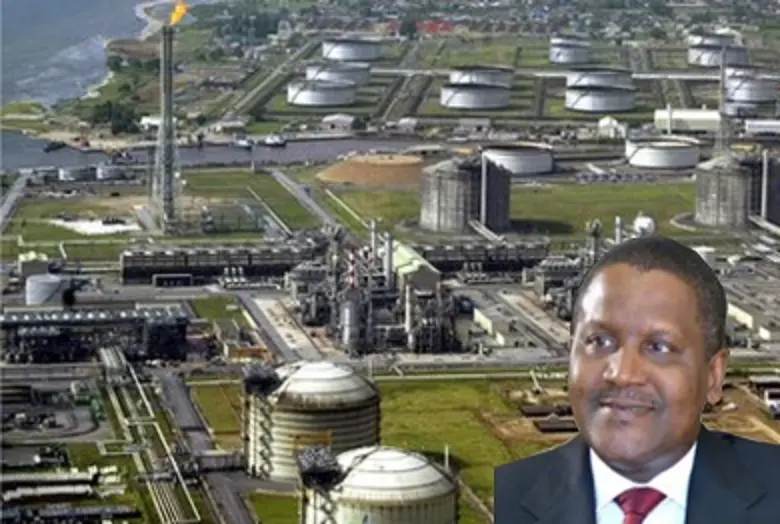
At a press conference marking the refinery’s one-year anniversary, Aliko Dangote, President and Chief Executive of the Dangote Group, declared: “Since the refinery began producing petrol, Nigeria’s five-decade-long struggle with fuel queues has finally come to an end.”For him, the refinery was not about self-congratulation but about correcting an economic distortion that had stifled Nigeria since the 1970s.
The Struggle Since 1975
Dangote’s words echoed the frustrations of millions of Nigerians who remember fuel scarcity as far back as the mid-1970s. Despite being Africa’s largest oil producer, Nigeria became heavily reliant on imported petrol as its four state-owned refineries collapsed into disrepair.
Subsidy regimes created fertile ground for fraud. Official figures often claimed daily consumption of 60 million liters of petrol when actual demand was closer to 30 million, fueling scams that cost the treasury billions of dollars. Ordinary Nigerians paid the price in endless queues, black-market prices, and lost productivity.
It is against this backdrop that the Dangote Refinery , with a capacity of 650,000 barrels per day, the largest single-train refinery in the world — has been hailed as a game-changer.
A Risk That Could Have Failed
The refinery’s story was far from straightforward. “If it had gone wrong, lenders would have taken our assets,” Dangote admitted. Financing the $19 billion complex meant taking on enormous risks. It required not only debt and equity from Nigerian banks but also international backing.
Unlike “plug-and-play” refineries in other parts of the world, the Dangote project was built from scratch on reclaimed land in the Lekki Free Zone. The group had to dredge, reclaim, and prepare the ground before even laying the foundations. Dangote personally invested in power plants, jetties, and storage facilities to guarantee operational independence.
The business gamble was massive. Yet, one year on, it is paying off.
Allegations of Favoritism and Exports
Critics have accused the refinery of selling products abroad at lower prices than those offered to Nigerian buyers. Dangote dismissed such allegations as propaganda from entrenched interests who benefitted from decades of importation.
“What we’ve done is to make our country and continent proud,” he said. “Previously, only two African countries were not importing petrol. Now, even they have resumed imports. That is detrimental to Africa.”
Indeed, between June and September alone, the refinery exported 1.1 billion liters of fuel, with buyers as far afield as the United States, Saudi Arabia, and Singapore. Such sales, Dangote insists, prove that the refinery meets international standards and demonstrates Africa’s capacity to supply not only itself but the world.
Jobs, CNG Trucks, and Worker Welfare
The refinery’s influence goes beyond fuel. The Dangote Group has rolled out 4,000 compressed natural gas (CNG) trucks to support distribution, expected to create more than 24,000 jobs.
Responding to concerns that mechanization could threaten employment, Dangote stressed: “The trucks will not be operated by robots. Our employees earn salaries three times the minimum wage. Our drivers receive a living wage, life insurance, health insurance covering themselves, their spouses, and up to four children, as well as a lifelong pension.”
In a country where labor disputes are frequent and working conditions often precarious, such commitments are a powerful signal.
“A Breather for the Economy”
Arise News business analyst Chika Obon, reflecting on the refinery’s impact, described it as “a breath of fresh air” after decades of failed refinery rehabilitation projects.
He recalled visiting the site in its early days: “We arrived at 7 a.m. and by 6 p.m. we hadn’t even covered half the complex. I asked Aliko, ‘Why did you need to do this?’ He said Africa cannot just depend on others; Nigeria must produce for itself.”
For Obon, the project has transformed not just Nigeria but also Africa’s economic dynamics. “Because of the Dangote Refinery, many Western refineries are under pressure. Their margins have collapsed. This is one project that everybody, from the President to the National Assembly, must support if we are serious about sovereignty.”
The Politics of Monopoly
Yet the refinery’s rise has triggered anxieties. Fuel importers, long beneficiaries of Nigeria’s broken system, argue that Dangote risks creating a monopoly. Some lawmakers and unions echo these fears, warning against overdependence on a single private entity for such a strategic commodity.
Obon counters this view. “Nigeria cannot be a dumping ground anymore. For decades, we allowed foreign suppliers and local cartels to profit while our economy bled. Dangote took risks no one else did , risks even billionaires refused to touch. If we allow propaganda about monopoly to derail this, we will go back to the same failed cycle.”
A Billion-Dollar Export Future
The refinery is already positioning itself as a major foreign exchange earner. By substituting imports, Nigeria saves billions of dollars annually. By exporting petrol, diesel, aviation fuel, and other products, it is poised to generate hard currency inflows.
The Dangote Group forecasts that the refinery, together with its cement exports, could bring in several billion dollars annually, helping to stabilize Nigeria’s forex market and reduce pressure on the naira.
Government Policy and the Customs Levy
The refinery’s success, however, cannot exist in isolation. It depends on government support , particularly in guaranteeing crude oil supply and ensuring fair regulation.
One recent policy shift underscores this delicate balance. The federal government suspended the 4% Free On Board (FOB) charge on imported goods imposed by the Nigeria Customs Service. Initially introduced in September 2023, the levy was meant to streamline customs charges but instead raised costs for importers, driving inflation higher.
“The levy became an additional burden,” Obon explained. “It was supposed to replace existing duties but never did, so it simply added cost. Importers of raw materials and assembled goods protested, and government wisely suspended it.”
For Obon, the episode reflects a larger truth: “Nigeria must rethink the role of customs at the ports. Automation, transparency, and efficiency are key. Without reform, we will keep suffocating local producers and fueling inflation.”
Beyond the Refinery: A Call for Industrial Self-Sufficiency
The Dangote Refinery’s first year underscores both the possibilities and the challenges of Nigerian industrialization. On one hand, it has ended fuel scarcity, cut imports, created jobs, and positioned Nigeria as an exporter. On the other, it highlights how fragile these gains remain in the face of entrenched interests, policy inconsistency, and governance deficits.
For Dangote, the mission is clear: “We did not build this refinery for celebration. We built it because Africa must stand on its own feet.”
A Test of National Will
The one-year milestone of the Dangote Refinery is more than a corporate anniversary. It is a test of Nigeria’s national will , to support local production over imports, to reform customs and port operations, and to resist the vested interests that thrive on inefficiency.
If successful, the refinery could mark the turning point Nigerians have been waiting for since 1975: a shift from a resource-rich nation addicted to imports to one capable of producing, refining, and exporting at scale.
The refinery’s future, and Nigeria’s, now depend not only on Aliko Dangote’s risk-taking but also on whether policymakers, regulators, and citizens choose to protect and build upon this fragile victory.