

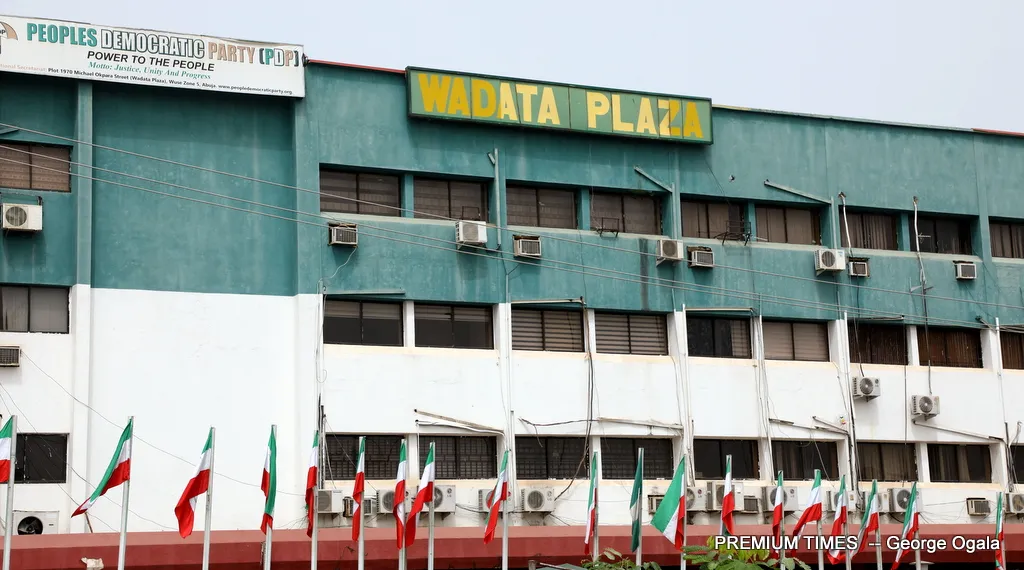
The crisis within the Peoples Democratic Party (PDP) has deepened as the National Disciplinary Committee formally invited the party’s embattled National Secretary, Samuel Anyanwu, former Benue State Governor, Samuel Ortom, and ten others to appear before it over alleged infractions. This move comes amid ongoing internal tensions within the party, as members and stakeholders grapple with issues of leadership, discipline, and reconciliation ahead of the next general elections. The disciplinary process is being closely watched by party members, political analysts, and the general public, as it could shape the future of Nigeria’s main opposition party.
The Chairman of the committee, Tom Ikimi, in a statement released on Thursday in Abuja, confirmed that the panel had received and reviewed five petitions, signaling the seriousness of the issues at hand. The committee convened at the PDP’s Legacy House in Abuja on Wednesday to discuss the petitions and determine the next course of action. Acting under the authority of Section 57(1) of the PDP Constitution (as amended in 2017), the committee is tasked with ensuring that discipline is maintained within the party. The decision to summon key figures such as Anyanwu and Ortom underscores the party’s commitment to addressing internal grievances and enforcing order among its ranks.
While the committee acknowledged the importance of looking into all petitions, it also took the strategic decision to step down three petitions against some key members of the National Working Committee (NWC). According to Ikimi, this step was taken to avoid disrupting the ongoing reconciliation efforts being led by the PDP Governors’ Forum and the Board of Trustees. This indicates that while the party is keen on enforcing discipline, it is also prioritizing internal unity, particularly as it works towards strengthening its position ahead of future elections. The PDP has faced several internal crises in recent years, with divisions among key members affecting its ability to function as a strong opposition force against the ruling All Progressives Congress (APC). The party leadership is now walking a tightrope between addressing internal disputes and ensuring that its structure remains intact.
Despite stepping down some petitions, the committee resolved to move forward with others, particularly those involving former Benue State Governor Samuel Ortom, PDP National Secretary Samuel Anyanwu, and ten others. These individuals have been formally invited to appear before the disciplinary panel on Wednesday, February 12, at Legacy House, Maitama, Abuja. The invitation signifies the seriousness of the allegations against them, and their responses during the inquiry will be crucial in determining the committee’s next steps. The disciplinary process could have significant political consequences for those involved, as any adverse findings may impact their standing within the party and their future political ambitions.
The committee chairman emphasized that both the petitioners and the accused individuals, along with their witnesses, are expected to honor the invitations. He reassured party members that the disciplinary process would be transparent, fair, and in accordance with the principles outlined in the PDP Constitution. The invitation of these prominent figures is expected to draw widespread attention, with many awaiting the outcome to see how the PDP will handle the internal crisis. With the party’s credibility at stake, the handling of these cases will serve as a litmus test for its ability to enforce internal discipline without causing further divisions.
As the PDP continues to navigate these internal conflicts, Ikimi reiterated the committee’s commitment to ensuring discipline within the party while maintaining fairness in its proceedings. He advised all party members with grievances to make use of the existing party structures and formal complaint channels, rather than resorting to actions that could destabilize the party. This statement comes as the PDP struggles to maintain a united front amid growing concerns about its internal governance. With the 2027 general elections on the horizon, the party is under pressure to resolve its internal disputes and present a strong and cohesive leadership that can challenge the ruling APC.
The invitation of key figures like Ortom and Anyanwu underscores the complexities of the PDP’s internal struggles. In recent years, the party has witnessed defections, leadership tussles, and power struggles that have weakened its influence in Nigeria’s political landscape. The outcome of this disciplinary process could set a precedent for how the party handles internal disputes moving forward. If the process is seen as fair and effective, it could help rebuild confidence among party members and supporters. However, if it leads to further divisions, it could jeopardize the party’s chances in future elections. The PDP’s ability to balance discipline with reconciliation will be critical in determining its trajectory in the coming years.
This latest development is a reflection of the broader challenges facing Nigeria’s political parties, where internal disputes often threaten to derail party unity. The PDP’s decision to pursue disciplinary action against some members while stepping down cases involving others raises questions about the party’s strategy for maintaining order. As political analysts and stakeholders observe these proceedings, the implications for the party’s stability and future electoral performance remain uncertain. The coming weeks will be crucial as the PDP navigates this delicate situation, and all eyes will be on how the party leadership handles the matter.
Stay informed with the latest news from Nigeria and beyond! Join us on WhatsApp or Telegram for real-time updates. Have a report or article? Send it to report@trendingnaijanews.com. Follow us on X (Twitter), Instagram, LinkedIn, YouTube, TikTok, and Facebook for more updates.