

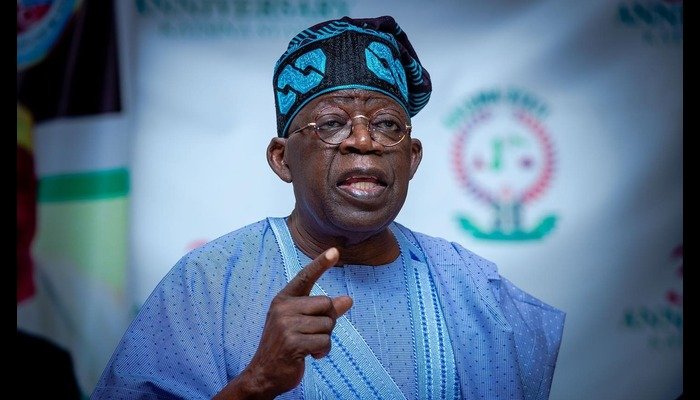
Nigeria’s political landscape has shifted dramatically in the weeks leading up to May 2026, and the story unfolding is one that could determine who governs Africa’s most populous nation for the next four years. What began as a promising opposition coalition capable of mounting a serious challenge against President Bola Ahmed Tinubu and the All Progressives Congress has collapsed into a chaotic three-way scramble, with Peter Obi, Rabiu Kwankwaso, and former Vice President Atiku Abubakar now operating from separate political platforms and pointing in different directions. For Tinubu, the timing could not be better.
The sequence of events has been swift and consequential. Atiku moved from the Peoples Democratic Party into the African Democratic Congress, repositioning that party temporarily as the central hub of opposition politics. Then, in a move that stunned many political watchers, Peter Obi and Kwankwaso departed the ADC for the Nigeria Democratic Congress, taking with them the grassroots energy of the Obidient movement and the Kwankwasiyya base in northern Nigeria. That exit effectively split the anti-Tinubu vote into at least three streams the ADC, the NDC, and a weakened PDP each with credible leaders but none with the numbers to win a presidential election alone.
The arithmetic is sobering. In the 2023 election, Obi secured about 6.1 million votes while Kwankwaso polled roughly 1.5 million. Together, that is 7.6 million votes against Tinubu’s approximately 8.8 million. The combined opposition total was already competitive on paper. But the key word was “combined.” Running on separate platforms without coordination, those votes will not add up they will divide further. Political analyst Ayo Mairo-Ese has pointed out that even the Obi-Kwankwaso alliance on a single platform faces the formidable structural advantage of incumbency, and that incumbency is only growing stronger as the Tinubu administration accumulates economic policy wins heading into campaign season.
Meanwhile, the APC is not standing still. The ruling party has been busy conducting senatorial primaries across states, with some drama of its own a Rivers State senator was disqualified this week from contesting her own APC senatorial primary, adding internal tension to a party that is still projecting unity at the presidential level. The Social Democratic Party’s Prince Adewole Adebayo has also declared publicly that he is not intimidated by the prospect of facing Tinubu in 2027, adding another name to what is becoming a crowded but fragmented opposition field.
Inside the NDC, leaders are attempting to project stability and momentum. Former Bayelsa governor and NDC national figure Senator Henry Seriake Dickson has described the party as “united and free” from factional disputes that have plagued rival platforms. Obi, for his part, said the decision to leave the ADC was driven by a desire to escape “endless internal crises” and focus on governance issues affecting everyday Nigerians. But critics, including former Sports Minister Solomon Dalung, say personal ambition has overtaken the broader objective of unseating the APC.
One dimension that is gaining significant attention is the North-South zoning debate. Some political voices, particularly in the Southwest and among Yoruba interests, argue that even if the APC loses in 2027, the presidency should return to the South in 2031. That framing, which Tinubu’s allies have actively promoted, has been attacked by opposition voices like media personality Dele Momodu as a deliberate distraction a strategy to divide Nigerians along regional lines instead of focusing on governance failures in electricity, security, and economic reform.
For ordinary Nigerians, especially the young voters who powered the Obidient movement in 2023, the opposition’s inability to settle on a candidate and a platform is generating visible frustration. Social media platforms have been vocal about the perception that politicians are prioritizing their own careers over the national interest. The 2027 election is now 19 months away. The window for opposition consolidation is narrowing fast.
Today’s Key Highlights:
- Atiku, Obi, and Kwankwaso are now on three separate political platforms heading into 2027
- Obi secured 6.1 million votes in 2023; Kwankwaso got 1.5 million — but split, those numbers may not be enough
- The NDC is positioning itself as the new opposition centre, but fragmentation persists
- APC is the primary beneficiary of opposition division, with Tinubu projecting incumbency strength
- The North-South zoning debate is intensifying as a potential electoral wedge issue