

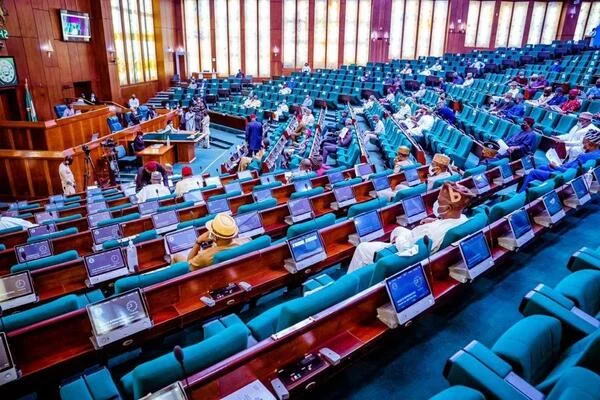
As the 2027 election cycle approaches, the structural reforms that earned Nigeria its credit upgrade face their most serious test — political pressure, institutional capacity gaps, and the perennial temptation of electoral spending.
Nigeria’s governance reform story in 2026 is not a simple narrative of success. It is a more complex account of genuine structural progress made against significant institutional headwinds, with the credibility of those gains now being tested by the approach of an election year that historically triggers the fiscal and political behaviors that undo reform momentum. The S&P credit upgrade, the ISIS operation, and the fintech policy framework are real achievements. But reading them alongside the full spectrum of governance developments in Nigeria today reveals an institution still grappling with fundamental structural challenges that economic ratings cannot fully capture.
The judiciary is navigating a period of significant self-examination. Chief Justice of Nigeria Justice Kudirat Kekere-Ekun has publicly stated that courts “can no longer remain detached from technology developments” a signal that the nation’s judicial institutions are beginning to confront the reality that a legal system operating on paper-based processes and physical hearings cannot adequately serve a digital economy. The NJI and NDIC have intensified efforts this month to sensitize judges on complex financial crimes and bank resolution proceedings, recognizing that Nigeria’s growing fintech sector will generate legal disputes that require specialized judicial competence. High court judges concluded a week-long sensitization seminar on these issues a modest but meaningful institutional investment.
Security remains the most persistent governance deficit. The Senate condemned in forceful terms the abduction of 87 students and teachers in Borno and Oyo states within a single 24-hour period this week a reminder that despite the headline counterterrorism success of the US-Nigeria joint ISIS operation, the basic security of Nigerian citizens in large parts of the country remains dangerously inadequate. The Senate noted bitterly that $30 million had been raised globally in 2014 to secure public and private schools following the Chibok kidnappings, yet school abductions continue more than a decade later. The institutional failure this represents of funding mobilization without sustainable execution is one of the defining governance challenges of modern Nigeria.
The Presidential Enabling Business Environment Council conducted an enforcement exercise along the Lagos Port Corridor in May, signaling attention to the logistical and compliance infrastructure that constrains Nigerian trade. Port efficiency has long been identified by Nigerian manufacturers, importers, and exporters as one of the most significant structural bottlenecks in the economy, generating compliance costs and informal payments that add to the cost of doing business and reduce Nigeria’s competitiveness as a trade hub. The NPA’s strong first-quarter 2026 performance suggests some operational improvement, but structural reform of port infrastructure and customs processes requires sustained political commitment beyond quarterly results.
The Nigerian Medical Association’s call for a public inquiry into an EFCC raid on the University of Uyo Teaching Hospital represents a different category of governance concern the tension between legitimate anti-corruption enforcement and the risk that enforcement actions, if poorly targeted or procedurally irregular, damage public institutions whose functions are irreplaceable. The NMA’s position is not that anti-corruption enforcement is wrong. It is that the manner of the UUTH raid raised procedural questions that deserve transparent public examination. How the government responds to that call will signal how seriously it takes institutional due process as a governance standard.
Read More: Afrobeats 3.0 Is Here: How Nigerian Music in 2026 Is Rewriting the Global Playbook
The CBN’s warning about election-related spending as a potential inflation trigger is the most consequential near-term governance risk. Long before INEC officially begins 2027 election preparations, government spending in many states has already taken on a distinctly electoral character governors and political officeholders distributing “empowerment packages” at weekly ceremonies that function as campaign events. This is not unique to any administration or party. It is a structural feature of Nigerian electoral politics that consistently undermines fiscal discipline at precisely the moment when economic fundamentals are beginning to improve. If the Tinubu administration allows federal spending to drift in a similar direction, the macroeconomic credibility that S&P has just recognized could erode faster than it was built.
The governance agenda for Nigeria’s second half of 2026 and into 2027 requires not only maintaining the reform policies that attracted the credit upgrade but also actively building the institutional capacity judicial, security, regulatory, and fiscal that makes those policies durable across election cycles and changes of government. Technical policy excellence without institutional embedding is not reform. It is a temporary configuration that reverts to type when political incentives change. Nigeria’s reform story is real. Its durability is still being determined.
Today’s Key Highlights:
- 87 students and teachers were abducted in Borno and Oyo within 24 hours despite $30M raised in 2014 for school security
- Chief Justice Kekere-Ekun has called for courts to integrate technology a significant institutional signal
- CBN warned that election-related government spending may trigger inflation ahead of 2027
- PEBEC enforcement along the Lagos Port Corridor signals attention to trade logistics reform
- NMA called for a public inquiry into an EFCC raid on the University of Uyo Teaching Hospital
Meta Description: Nigeria’s governance reforms face their toughest test as 2027 elections approach. Security failures, institutional gaps, and electoral spending risks threaten hard-won progress.
SEO Keywords: Nigeria governance reform 2026, Nigeria 2027 election spending, CBN inflation warning, Nigeria security abductions, judiciary technology Nigeria, PEBEC Lagos port, Nigeria public sector reform
Slug: nigeria-governance-reform-pressure-2027-election-cycle